Showing posts with label doulas. Show all posts

Wednesday, January 23, 2013

Postpartum Survival Tips


324“In western society, the baby gets attention while the mother is given lectures. Pregnancy is considered an illness; once the ‘illness’ is over, interest in her wanes. Mothers in ‘civilized’ countries often have no or very little help with a new baby. Women tend to be home alone to fend for themselves and the children. They are typically isolated socially & expected to complete their usual chores…while being the sole person to care for the infant…” –Milk, Money, & Madness
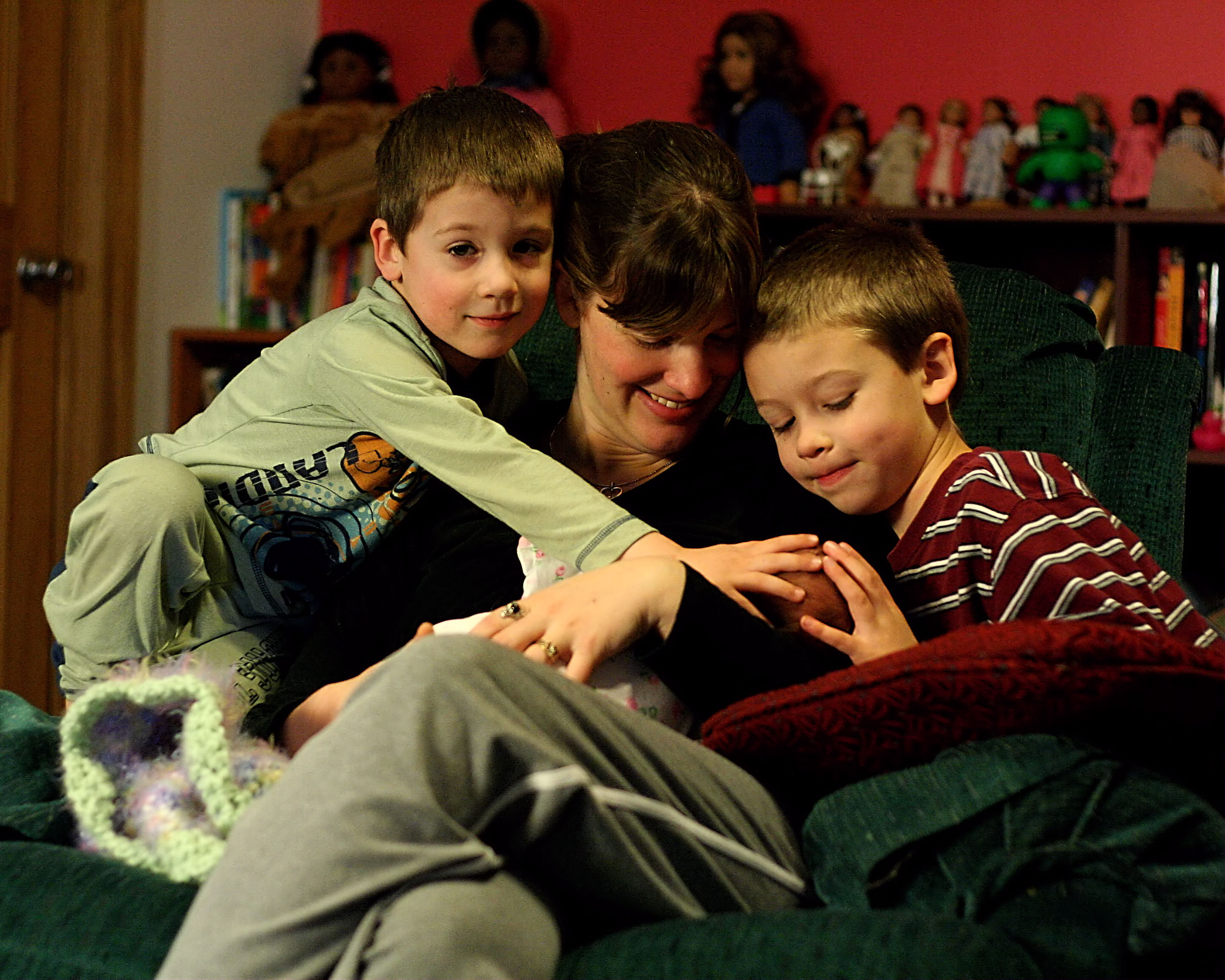
I recently shared this quote on my Facebook page and a reader responded expressing her fear at preparing to face this exact situation. I responded that it is an unfortunately realistic fear and suggested she check out some resources for postpartum planning that might help work through the fear as well as plan for a nurturing postpartum instead of a stressful one. She then responded that she has a very minimal local support system and that got me thinking about postpartum survival tips for when one’s local support system is limited…

My ideas:
  •  Suggest to your out of town friends and family that they contribute to a “babymoon” for you and all pitch in to hire a postpartum doula.
  • Tactfully remind people that even if they’re too far away to bring you a meal, they can certainly call up a local restaurant and order a delivery for you! I think a lot of us forget that is an option for a long distance family member (that we would bring food to if they were local). In my experience, getting enough food is a huge issue postpartum! I remember long distance friends having babies a variety of times and wishing I was close enough to bring them dinner. Duh. Many restaurants do, in fact, deliver food!
  • Be your own “best friend” by preparing and freezing meals and snacks now. I know I sound obsessed with food, but it is totally one the hardest things to take care of postpartum, but so important!
  • Put together a mama survival kit for yourself that you can then open up when you need it. Some ideas here and more ideas of variable quality here.
  • If you don’t have a sense of community work, actively work on building one—go to La Leche League meetings, Holistic Moms Network, Mothers of Preschoolers, Attachment Parenting International, or other mothers’ groups. Go BEFORE you have your baby if you can.
Other ideas for helpers:
  • In addition to my idea of ordering delivery for a postpartum family as a way of bringing them dinner long distance, is to order a dinner through the mail via the business Spoonful of Comfort. They will send fresh chicken soup, rolls, cookies, and a baby present via Priority Mail (packed with freezer packs). I send it with a note saying, “this is me, bringing you dinner!” Friendly tip from unfortunate personal experience: if you are doing this for a friend make SURE you enter THEIR address as the shipping address and not your OWN address, or you will then be forced to enjoy their postpartum meal and feel like a total idiot at the same time.
  • Don’t forget about other meals—breakfast = awesome. Muffins = awesome.
  • Pay it forward–I think sometimes people feel like they don’t know someone well enough to bring them food, or maybe they even do a mental “tally” and think, “well, she won’t be bringing me food ever, so why should I take time to bring it to her” or, “she didn’t make anything for me when I had my last baby, so I’m off the hook on this one.” When I had Alaina, a mother who had literally JUST moved to town and that I had not yet met, sent a hot breakfast casserole to me (that my lovely doula delivered to my lovely mother at the snowy end of my gravel road).  I think of that generosity when I bring a postpartum meal to a mama from whom I will never end up getting a reciprocal meal. Who cares. She needs it. You can do it!
  • Another doula commented on my post: “Do you know a mom that is about to have a baby? Or maybe a momma who just gave birth recently? Don’t even ‘offer’ just show up with a bucket of cleaning supplies, a bag of healthy food, and maybe something nice for her. Go tuck her in bed with baby, and get to work on her home.. When she wakes, she has nothing to do but nurse that baby. (If she has other kids, delegate chores with them, if to young, call mutual friends to sit for them! Our Mom’s need this, up through 6-9weeks pp, Mom’s need help, even longer for some. There is a reason the US has the highest Post Partum Depression issues in the developed world… Create your community! DO IT!” I would add that if you do not know mom well, do not plan to engage in a deep cleaning project and stay for a long time doing such project.
I also posted to the Citizens for Midwifery Facebook page asking for contributions for postpartum survival tips when your local support system is limited. What beautiful, helpful women we have on that page! While I didn’t get many suggestions specifically for minimal local support systems, I did get a nice collection of survival tip ideas:
  • Trust your own instincts. Many women have great advice but if your heart is telling you something else, go with it.
  • Craniosacral therapy… one session for you and one for the baby.
  • In addition to lots of suggestions to hire a postpartum doula, there were lots and lots and lots of shout-outs for placenta encapsulation. I echo it myself.
  • Get out of the house alone! For me, it’s been crucial to my sanity to leave my home, by myself, even if only for an hour or two between nursings. Just a Target run was therapeutic!
  • Kangaroo care for high needs babies.
  • Lots of mentions of it being okay to accept help and okay to ask for help.
  • A lot of new moms get really overwhelmed by family and friends coming by to see baby, and it’s important for them to remember that they can always put out a sign that says “mom and baby sleeping!” (even if they aren’t) anytime they need a break.
  • Watch only positive stuff without violence on TV (cooking shows, home improvement) as regular TV is really violent for new mamas and she may be watching more with all the nursing/healing.
  • Have homemade high protein frozen meals (and snacks) in the freezer before birth so anyone can warm them up for the household after birth. If breastfeeding, get much more rest than you think you need from day one to ensure an abundant milk supply (*note from Molly: it is true that prolactin receptors are “laid down” during the first days of breastfeeding. Breastfeeding “early and often” makes sure that there are an ample supply of receptors in your brain.)
  • Have a sign up sheet for family and friends to choose which chores to help with, gift certificates to a cleaning service, stocking up on disposable plates and dinnerware…
  • A new mommy group can be a life saver. Just knowing that other mommies are going through the same thing help
  • Food registries such as mealtrain and mealbaby. Not enough families know about these amazing and free services. (*note from Molly: we often use Care Calendar locally.)
  • Plan ahead and freeze several of your favorite freeze-able meals. Let the clothes be a little wrinkled. Use paper and plastic ware instead of worrying over dishes. Stay laying down first 3 days postpartum (preferably naked: it gives a certain message and is better for baby anyway) and the first week stay in pajamas. Enjoy frequent rest times, even if you can’t sleep.
  • Baby wearing….lots of time in bed, sleeping cuddling and feeding babe skin to skin…brest friend nursing pillow
  • Send a subliminal message to the limited visitors you’ll have (set limits early with partner) by wearing your robe for several weeks
  • Eat well, accept all offers of help and food, get out of the house alone!
  • I loved getting meals brought by friends, but I didn’t always want to socialize. So, someone to run interference, or maybe a drop-off location for leaving food. (*note from Molly: my doula was the perfect person for this job.)
  • Ask for help! No one will know what you need if you don’t speak up.
  • Don’t go without showering for more than four or five days. Brush your teeth once a day no matter what, even if it ends up being at a weird time. Take your vitamins/ herbal supplements/tea. HYDRATE! Nap with baby if you need to, arrange childcare for older siblings sometimes, but also listen to your instincts—one of my worst baby blues moments was with my third when my older two were gone and I wanted them home!
  • LOVE yourself, nap when you can , Yes you are doing it right, No it’s no ones business (breastfeeding/cosleeping/pumping etc.) allow opinions and advice to slide off, drink lots of water , eat small snacks/meals, love your baby look into their beautiful eyes and connect, skin to skin whenever even with dad or siblings (safely) cherish these moments they don’t last forever, the laundry will get done, the dishes will be get cleaned …
  • Take a “babymoon”. Put on a robe when someone comes to the door–even if you have real clothes underneath. Sleep when the baby sleeps. Don’t answer the phone. Remember, self-care is essential for you to be able to care for your baby.
  • I loved having herbal soaked pad (frozen) to wear afterwards, felt soooo good. Have easy one-handed snacks available and a BIG water bottle.
  • In those last few months of pregnancy I prepare meals to freeze (I start about month 5 or 6). I make up 6 weeks worth of dinners (they always last longer since we have a great church family and friends that bring us meals). After baby is born I can put 2-3 dinners in the refrigerator (to thaw) a few days before I need them. Then all I have to do is pop one in the oven and BAM….dinner’s ready. I love “Don’t Panic, Dinner’s In The Freezer” I & II. The recipes are amazing and all freeze well. Hope that helps!
  • Skin-to-skin in bed for as long as possible; 40 days of rest, recuperation, establishing breastfeeding, bonding, limited visitors, and limited activity; drink when the baby nurses; sleep when the baby sleeps; nurse on demand; learn to wear your baby; and use a peri bottle when peeing! A postpartum herb bath and massage are nice, too.
  • Hot water bottle for afterpains
  • Placenta encapsulation and WishGarden Herbs ReBalance tincture!
  • Chiropractic adjustments, ASAP
  • Call in your mom. My mom’s job after my second was born was to keep me fed and to spend some quality time with my older child.
  • Drag oneself outside and BREATHE! :)
  • Water…..hot tub, shower, steam, pool, raindrops, snow, sauna, bath, river, stream, ocean, lake! If you can, immerse yourself, if you cannot, imagine yourself floating :-)
  • Lots of water, lots of protein and healthy fats, placenta encapsulation and low expectations of anything other than bonding time with baby.
  • Don’t try to impress others with how quickly you can get up and going, even if you can, just take it easy!!!!
  • It’s not in the asking for help; its in the accepting…
Surround her with support!

Check out these previous posts:

Mothers Matter–Creating a Postpartum Plan

Planning for Postpartum

Some reminders for postpartum mamas & those who love them

and a great one for helpers written by my own doula:

The Incredible Importance of Postpartum Support

And, remember…

“The first few months after a baby comes can be a lot like floating in a jar of honey—very sweet and golden, but very sticky too.”
–American College of Nurse-Midwives

This post is crossposted at Talk Birth.

Friday, August 17, 2012

Guest Post: How to Avoid a Medical Induction Seminar


Are you interested in natural effective techniques to avoid a medical induction?

Are you tired of seeing birthing mothers face a cascade of intervention that could be avoided?

Are you frustrated with seeing fear take over what could be an empowering birth?

Are you saddened by the amount of medicalisation in the birth process?
 
We are hosting a one-time complimentary teleseminar on Thursday September 13 at 830am (Sydney Australia time). That’s Perth 630am, Alice Springs/Darwin/Cairns 8am, Auckland NZ 1030am, In other parts of the world this means: Wednesday September 12, LA & Vancouver 330pm, NY & Montreal 630pm & London 1130pm.

Listen LIVE from your land line or Skype on the day if you can as there will be specials, or else receive a recording later and listen to it when you’re free – it’s that easy!

SAVE YOUR SPOT NOW BY CLICKING HERE => http://acubirth.com.au/opt-in-sept-2012

On this call, Naomi and Rebecca from Acubirth and the Red Tent Health Centre will reveal:

          • The biggest mistake that can hinder the start of birth

          • The best acupressure point to encourage bub to engage and ripen that cervix

          • What the ancient secrets are and how they can empower your women

          • How Chinese medicine can deliver more choice and effective outcomes for birth

          • The importance of touch and how crucial it is in the lead up to birth

          • How to calm nerves and deal naturally with anxiety

          • Inspiring pregnancy and birthing stories where situations have been incredibly turned around using acupressure

You definitely want to save your spot for this one-time event. It’s so easy to attend from anywhere, in the comfort of your own home or wherever you are on the move. If you can, be near a computer connected to the internet, as we’ll be referring to juicy info on line.

Naomi and Rebecca both run Acubirth for Midwives as well as the Red Tent Health Centre in Sydney, Australia. Acubirth is a specialised education website for midwives to find out how natural eastern remedies can improve birthing outcomes for their clients, as well as how it can support their own health and wellbeing. All courses are accredited by the Australian College of Midwives.

On this exciting call you will not only get an insight into how supportive Chinese medicine can be for your women but you will come away with tools you can use right away. On the day we’ll be telling you how you can learn even more about acupressure for midwifery, in a way that’s accredited by the Australian College of Midwives (and we’re in the process of getting specialty credit from the American College of Nurse Midwives also).

SAVE YOUR SPOT NOW BY CLICKING HERE => http://acubirth.com.au/opt-in-sept-2012

We look forward to meeting with you on the 13th.

Warmly

Naomi Abeshouse and Rebecca Mar Young
Your Eastern Birthing Mentors
Acubirth and Red Tent Health Centre

ACUBIRTH FOR MIDWIVES
~ Empowering mothers with eastern remedies ~
www.AcuBirth.com.au

Join our Acubirth for Midwives facebook group: Acubirth-for-Midwives
Follow Acubirth on Twitter @AcuBirthSydney: https://twitter.com/#!/AcuBirthSydney

Friday, December 23, 2011

Doulas & Homebirth

Earlier this month I posted to the CfM Facebook page asking for opinions about doulas at homebirths. I am the editor of the Friends of Missouri Midwives newsletter and was seeking contributions for the winter issue with the theme of Doulas. I received some excellent feedback from the CfM page "likers" as well as from the FoMM membership. As an extended companion piece to the article that eventually went into the newsletter, we ran the full article on the Friends of Missouri Midwives blog. Since CfM fans were contributors, I felt it appropriate to share the full article on this blog as well! Thanks to all who contributed their stories and ideas. We appreciate each one!

Doulas and Homebirth

Compiled by Molly Remer

The decision to hire a doula is a personal one, regardless of in which setting you give birth. My first baby was born at a birth center with the presence of a midwife, a doctor, my doula, a friend, my mother, and my husband. In hindsight, I felt like it had been too many people and that the doula hadn’t really been needed. For my second birth, at home, it was extremely important to me to have as few people present as possible. My husband, my mom, and my son greeted the arrival of my second son. My midwife arrived five minutes before his birth—just in time to catch! My midwife for this birth was so amazing, that I didn’t feel the need for any other professional care. I still miss her! For my third birth also at home, this time a second trimester miscarriage with only my husband present, I really wished I had a doula there for emotional support and supportive physical care tasks (not medical support, but tea bringing and towel washing). And, finally, with my last baby, while I liked and respected my midwife I didn't have the same warm bond with her and really wanted to hire a doula, precisely because I was missing some of the emotional component I value so highly in midwifery care. It is really the little things that make doula care so special. In the included photo my doula (FoMM President, Summer!) puts warm socks on me after my baby’s January birth.

Despite my own range of personal experiences, when calling for contributions for this article, I still anticipated receiving a number of responses suggesting that doulas at homebirth are unnecessary, or redundant. After all, an emotional connection and secure trust is often the hallmark of what differentiates the midwifery model from the medical model. However, the responses I received were overwhelmingly in favor of hiring a doula for a homebirth.

Finding inner power instead of crumbling in pain

Jami writes:
As I eagerly awaited my homebirth, I never considered getting a doula. I had two midwives assisting me, so I figured that would be enough, wasn’t that the same thing anyway? When labor hit in the middle of the night I could hardly function, I was in so much pain. Everything I learned in childbirth class went right out the window, and the same thing happened for my husband when it came to trying to help me. One of my midwives didn’t show up for a few more hours, so I was alone struggling with my blinding pain that whole time. Once she did arrive, and started walking me through my contractions, it made a world of difference. My homebirth ended up turning into a hospital transfer due to decelerations in my baby’s heartbeat during every contraction, and a doula was called out to stay with us while our midwives couldn’t. I don’t know what I would have done without her… Having to transfer to the hospital was a very scary experience, and when my much hoped-for homebirth turned into a much dreaded c-section, my doula was there as a voice of reason as well as much-needed emotional support. Looking back on the whole turn of events, I’m so grateful she was there and I have a whole new outlook on the work of a doula. There’s no way I’ll go through labor without one again. I had to get an epidural for the c-section, and that turned out to be the most terrible, painful part of the whole experience – much worse than labor by a long shot. Ever since my experience, I’ve been encouraging all of my friends to hire a doula for their births, whether they choose to go to a hospital or not. If they want a sure shot at avoiding drugs, a doula is the way to go at a hospital. And it makes sense at a hospital, but why would a home birth mom consider a doula? There aren’t any drugs or negatively persuasive doctors or medical staff to avoid there, and isn’t that the biggest reason to have a doula? I thought so, anyway. But doulas offer much more than a voice of reason against pressuring medical personnel. They help you find your inner power when you could easily crumble under the pain of labor. They erase fear that can easily find its way into your mind if you’re laboring without support. And, speaking from personal experience, they change labor from “painful” to “empowering”, turning it into the beautiful, positive experience it should be – you’re bringing a baby into the world! Something so wonderful shouldn’t be tagged with such a negative word as “painful”, and doulas make that possible. Labor is labor, no matter what your location is when you’re experiencing it, and having a doula there during it makes a huge difference.

A lasting legacy

Mandy writes: Hanging on my fridge is a note that reads, call me if you need groceries, a hug or anything! My doula put that there after I gave birth at home. For most of my pregnancy, I thought I would not need a doula at my homebirth; afterall, I had a wonderful midwife and assistant. As my pregnancy became more and more uncomfortable, I thought having extra support at my homebirth would be wise. I wanted the full attention from my partner, and I knew I would need my midwives to be able to focus their energy on the progression of my labor and on how well both our baby I were working together. My doula helped to support us as a family caring for my partner, our other child, as well as the much needed emotional and physical support that I ended up needing. It takes a lot of compassion and wise intuition to find the balance to meet the needs of both my family and the midwives. She provided massage, position suggestions, hydrotherapy, encouragement and cleaned, cooked, fetched things that were needed and even made coffee for everyone. While the midwives and I were caught up in the whirlwind of a difficult labor, she stood in the back keeping the peace. Every time I look at the note on my fridge, I smile and think about how deeply grateful I am to have had her with us on our birth journey.

And, Fabiane shares: My doula was my angel, she helped me through it. My labor lasted 36 hours and she was there all the way. She didn’t sleep, and I felt bad for her, she held me when I was in pain and scared, she told me everything was going to be fine. Her support made all the difference. Her kind words when I had to be transferred to the hospital made me realize I was not a failure for doing that. Meredith B. you are my angel!!!

Comparing experiences

Several women wrote sharing their experiences with both hospital births and homebirths and of a doula’s special touch.

Becky wrote to share:

We had a doula for four of our births, and a midwife for the last three. We had a midwife and a doula for one of them. We had a doctor who did housecalls for two of the births. We had a hospital birth that made us decide that the rest needed to be home births. We didn't have a doula for that one. I honestly wonder how differently that birth would have been if we had had a doula. Because the housecall doctor was much like a midwife would have been (although a different gender than most midwives), having a doula wasn't as important as if it had been hospital. However, having a female there was a lot better than a male doctor, and she stayed with me for the hours and hours (and hours) that I was in labor before we called the doctor.

Sara writes:
I had
the same doula at both my hospital birth and my homebirth and it was well worth it in both cases. At the homebirth she obviously didn't have to function as a warrior/advocate like she did at the hospital birth, but it was still wonderful to have her there in a supportive role. My husband was there to give support as well, but there is just a different kind of support that comes from another woman, especially one whom you know has experienced what you are going through at that moment. It also seemed at both births that she knew just what to say at the right moment when I was having trouble, whether it was how to take the edge off of the contractions, or helping things move along when my pushing was ineffective. Having a doula there for mental and physical support provided comfort and assurance, while allowing my husband to be "in the moment" with me while my midwife could focus on the particulars of the labor and delivery themselves. I wouldn't have had things any other way and I would highly recommend having a doula at any birth, home or hospital.

The benefits of a doula:

Angela shares:

The midwife team I had for my homebirth were trained doulas. I didn't know exactly what would be midwife roles and what would be them acting as doulas. In hindsight I think having a doula with the midwives may have been a little nicer since it was my first homebirth/natural birth and the midwife seemed to be having to do a little more "technical" stuff than I expected but it probably depends on lots of factors. Either way, I did fine and the baby came out! My husband was there too doing his best. I look at it as a learning curve so I hope to have more kids and have less and less worry and pain with each birth! (doula or not!)

A midwife’s perspective

Debbie offered the following perspective on doulas at homebirth: I think doulas are wonderful for women choosing hospital birth. The kind of care the laboring woman gets from the hospital staff can really be supplemented by a doula. In that situation, a doula is a great benefit to the mother. I have a lot of doula friends, and I do not mean to disrespect them in any way. They go places and do work that I cannot emotionally handle. I am a homebirth midwife. I have had a couple interviews where a woman has asked if she should have a doula at her home birth. If someone wants to hire me and a doula, I will not try to talk them out of it. But I see my work as being a doula plus a midwife. I bring an assistant to every birth. If it’s a VBAC, I bring another fully-trained midwife. I don’t know what I would be doing during the birth if there was a doula there, too. If I had to sit in the corner and my only work was to check heart tones and catch the baby, I would feel like an obstetrician! I don’t want to do birth that way! I love birth! I love helping the woman through her contractions as they build and build. I love rubbing her back, holding her up, giving her bites of food and sips of drink, helping her squat, and breathing with her. During a birth I get tired, sore muscles from squatting and bending, sweaty from the heat, humidity and heavy lifting. But I wouldn’t have it any other way. I love my work!

Susan also wrote with the opinion that a midwife fills the doula role well: My experience of three homebirths is that the midwives play the role of doula as well. It seems to me that often one midwife is more "doula" and the other more "doctor", if that makes sense. The two together make a great team, and I'm sure their roles vary from birth to birth. If, perchance, there were only one midwife attending a birth, I believe a doula would be a wonderful addition.

A father’s perspective

Ben wrote to share his family’s experiences with doulas: Our first birth was in the hospital and it was horrific. I had been raised in an environment friendly to home-birth, but when it was my first child, I over-rode my wife's wishes and we had a hospital birth. It's one of the few things in my life I truly regret.

Our second and subsequent births were at home. We used a doctor who made housecalls on our first two home-births, but we also asked some old family friends to help out. They were doulas. I didn't even know what a "doula" was at the time.

From a male perspective, a doula is a life-saver. There I am, the 'extraneous' member of the family (during birth, at least)--but one who is wracked with emotions for the safety of my wife and child. My wife leans on me for her emotional support--and I was just as much an emotional wreck as she was, with that "I'm hiding my insecurities in machismo" facade. The doulas were as much a comfort to me as they were to her. Kind words, a hug, a held hand, those life-saver words, "It's okay, this is normal," a gentle suggestion to step away for a few moments. And when the baby came, when the emotions flooded over us both and all we could do is kiss and cry and hug and hold our life's joy in our arms together, the doulas were there to settle the room, soften the lights, take away the trash and clutter and afterbirth and details and all that myriad of things that neither one of us could even think about. While the doctor or midwife (we had both depending on the birth) was there to do all the technicals, to check on the health, the doulas were there to comfort, to settle, to relax the chaos of our lives and let us truly experience the first moments with our most precious treasure.

Men think about the costs, the finances, the harsh realities of life. If I were to give an expectant father advice about the new baby: Pay for a good midwife, pay for a good doula, make sure your wife is comfortable with both of them and slather the baby's bottom and diaper with vaseline for a week after birth (meconium was a real shock till I learned that trick). :)

Doulas weigh in

Genevieve: My favorite place to doula is at homebirths. I give my clients a discount for having a homebirth because, as I always tell them, it is easier on everyone! It's easier for the mom, baby, dad, doula, and midwife!

Hillary: I am a doula who has attended homebirths. It's a different thing. I find myself arriving before the midwife. Providing support for long labors so the midwife can conserve her energy for the important work she might need to do during the actual birth and immediately after. I find myself doula-ing the birth team. Making tea, providing support to the dad, taking pics and of course, supporting the mom as she wishes. I had a doula at my last birth and I relied on her a lot for emotional support during pregnancy. I'm so glad she was there.

I also posted to the Citizens for Midwifery Facebook page asking for input on the doula’s role at homebirth. While the responses were more varied, many women were squarely in favor of doula support during homebirth.

Opinions from the larger birth community

Gillian: As long as the doula understands that homebirths often need the doula to "do" less and "be" more I think it can be a great help to the client and the midwives. I did go to one birth with a control-freak doula who couldn't stop trying to fix everything but I think that was an anomaly.
What I notice, as a midwife, is that most clients are already paying for their homebirth care out-of-pocket and the idea of paying for additional support seems like quite a stretch. I haven't had any clients choose doula care for their homebirths unless the doula was also a friend or family member working attending for free out of love. I think I give really good support as a midwife so I don't think that my clients are lacking but during some births, especially the long ones, I can really see the benefit of someone else who can support while the midwife takes a snooze!

Christine: I was a doula before I ever got pregnant, so I actually had two at my first birth (one I had hired and one I had apprenticed with). Two was overkill, but my husband really appreciated having them there, probably more than I did! My next two births were fairly precipitous, so no doulas (although I had arranged to have one for the second birth). I loved being a doula at homebirths, and suspect that they are as useful at home (or maybe more so?) as they are in hospital. A doula empties the birth pool or makes supper for everyone, starts a load of laundry and rocks the baby while mom showers; basically does what needs to be done, so that everyone else can concentrate on their specific jobs...

Fonda: My last two were at home. Having to shell out nearly $4k out of pocket each time, paying for doula on top of that would have been impossible. That said, being at home I didn't really need one.

Maria: I had a homebirth but no doula. My midwife had two assistants and they acted very much like doulas, doing things like laundry, breakfast, partner support, etc. I also had a very fast labour, and think a doula would have been excessive. I recommend doulas all the time to my preggo friends, although I don't see myself ever hiring one...

Laura: I think one difference between home and hospital is that generally you know more what you are getting in advance in terms of support in a homebirth situation--usually you have one or maybe two midwives in a practice whom you already know fairly well prenatally, and perhaps an assistant or apprentice who works with the midwife. So you have a pretty good idea before you go into labor how much support and what type of support your particular midwife/practice will provide. In a hospital setting, the L&D nurse is really the primary potential support person besides a spouse or family member--and that is somebody you don't know until going into the hospital and it's a wild card how supportive or unsupportive the L&D nurse will be of your wishes or how much that person can/will do in terms of emotional support or comfort measures. I think doulas are more critical/necessary for that reason in a hospital setting than in a homebirth setting.

That said, I think it also depends on the particulars of your own homebirth situation. I hired a doula for my last homebirth because I had a midwife who worked alone (no assistant or apprentice) and I wanted to make sure there was an extra pair of hands/extra person available in case of 1) a long labor where my midwife and husband needed a break, 2) a complication of any sort, 3) as a backup support person for my older child in case her babysitter wasn't available to come and be there with/for her (no family nearby who could be with her during the birth).

Katie: I planned a homebirth with my twins, and did not have a doula. I ended up with a (pretty terrible) hospital birth and I WISH I had a doula. I will have a doula if I ever birth again, no matter where I birth (but hopefully it will be HBAC!), and I recommend EVERY mother I know to have a doula, no matter where she births.

Natalie: My midwife had an assistant at my three homebirths. I felt no need for a doula, but if I had a solo midwife or was planning a hospital birth I would want one.

Raissa: I had the same doula for my first (surgical) and second (home birth) and wouldn't have wanted it any other way. At home she came several hours before the midwife and really gave peace of mind for me and took some of the pressure off my husband. Worth every penny! (I literally paid for her with my babysitting money.) And, since the midwife got stuck in traffic, she unpacked the birth kit and almost got to catch the baby!

Elizabeth: We had our baby at home with the help of two midwives and a doula. Our doula was amazing. She is still the person from our birth team that I talk to the most -- it has been 18 months since the birth of our child. Her care and concern for my family's welfare has been ongoing and consistent. I strongly encourage any pregnant woman, regardless of where they intend to give birth, to hire a doula or search for volunteer doulas if hiring one is not financially feasible. I can't imagine having a baby in a hospital without a doula.

Kasey: I don't remember if the doula showed up during my labor or after to help my midwife, but my placenta wouldn't come out and I had to have a catheter put in, and since my husband was caring for the baby, the doula filled in (I'm petrified of needles and the like) and I have to say, I was very grateful she was there. If my husband couldn't have been there for whatever reason, I would definitely want a doula present, no doubt about that.

I really appreciate all the people who lent their voices to this article. I very much valued the specific and customized postpartum care my doula provided to me after my last homebirth and I’ve concluded that a doula has the potential to offer something unique and precious to families, in whatever setting the birth takes place. I also agree with Elizabeth’s remark above, that it does seem like the doula is the most likely member of the birth team to remain in contact with the family in the future. Perhaps it is because, even given the friendliness of the midwifery model, there is less of a "power differential" between mother and doula.

As we prepare to greet a new year, I propose this toast: Here’s to beautiful, empowering, healthy, fulfilling births for all women, in all settings, with the birth companions of their heart’s desire.

Monday, September 13, 2010

Book Review: Survivor Moms


Book Review: Survivor Moms: Women’s Stories of Birthing, Mothering and Healing after Sexual Abuse
By Mickey Sperlich & Julia Seng
Motherbaby Press, 2008
ISBN 978-1-89-044641-3
245 pages, softcover
http://www.midwiferytoday.com

Reviewed by Molly Remer, MSW, CCCE
http://talkbirth.wordpress.com

Past sexual abuse is an unfortunately common experience for women. Anyone who works with women of childbearing age should be mindful and informed of the effects of an abuse history on the woman’s experience of pregnancy, birthing, and mothering. Indeed, I consider this awareness to be a fundamental professional responsibility. Enter Survivor Moms, published by Motherbaby Press. This book is an incredibly in-depth look at the experiences and need of survivors of sexual abuse during the childbearing year.

One of the best and most unique features of the book is the “tab” format used for much of the clinical, research-based, or fact-based content in the book. Rather than lengthy chapters reviewing research and analyzing the phenomenon, textboxes containing quick facts and reference material are printed in the margins of many of the pages. The bulk of the narrative information in the main body of the text is then in the voices of mothers themselves, interspersed with commentary by the authors linking concepts, explaining ideas, and clarifying essentials. This is a powerful format that makes information readily and quickly available for reference as well as making the overall book very readable and approachable.

As someone with no personal abuse history who is currently pregnant, I did find the book to be a very emotionally difficult, intense, and almost overwhelming read at times. This is not a criticism in any way—sexual abuse is not a light or cheerful topic and it can be one that many people prefer to avoid. This is all the more reason for birth professionals to make a specific effort to be educated and informed.

Written both for mothers themselves and for the professionals who work with them, Survivor Moms is an essential part of any birth professional’s library. As noted in the book’s introduction, “We need to understand the impact of childhood abuse on birthing and mothering deeply, from hearing women’s stories. We also need to understand it broadly—from looking at the impact on samples and populations, on the body and on the culture.” Survivor Moms offers an accessible way of hearing those critically important stories and developing the necessary understanding to care compassionately for birthing women.

--
Disclosure: I received a complimentary copy of this book for review purposes.

Monday, August 9, 2010

Perennial Favorites

Recently, on the CfM Facebook page I posed the question: do you have a favorite birth book that you can re-read over and over, each time being engaged anew and/or learning something fresh from familiar words?

I asked the question because I am currently re-reading Birthing from Within for the sixth time. When I read this book, I find I always learn something new, gain fresh insight, or have ideas reinforced/validated. I read it for the first time during my first pregnancy and have read it during two subsequent pregnancies (and now again, during my fifth pregnancy) as well as two other times seeking insights and application for the birth classes I teach.

I asked this question and then went out of town for the day. When I returned, it absolutely made my day to see many responses to my question with lots of great books listed. Three other commenters shared that Birthing from Within is their favorite too and then there were over 30 other posts with other people's perennial favorites! Here is the list--I hope it will remind you to revisit some old treasures in your personal library.
  • Ina May's Guide to Childbirth (this, and/or Spiritual Midwifery received NINETEEN recommendations!)
  • Gentle Birth, Gentle Mothering by Sarah Buckley MD (x's 2)
  • Journey into Motherhood, edited by Sheri Menelli. The commenter said, "LOVED it. read it over and over. Full of inspiring, uplifting, wonderful birth stories."
  • Heart and Hands, by Elizabeth Davis (x's 2)
  • "Anything written by Sheila Kitzinger. She is my fave birthy authoress!" [note from Molly: she is definitely one of my top favorites as well!]
  • Hypnobirthing, by Marie Mongan (x's 3)
  • Birth: The Surprising History of How We Are Born, by Tina Cassidy
  • The Birth Partner, by Penny Simkin (x's 4)
  • Your Best Birth, by Ricki Lake
  • Gentle Birth Choices, by Barbara Harper (x's 2). Comment from FB fan: "It's the book I give to non-birth nuts to help them understand why I do what I do."
  • Open Season, by Nancy Wainer. Comment from fan: "get's at the heart of things on every level-body, mind and politics" [note from Molly: I LOVE this book too. Very fire-y!]
  • Orgasmic Birth, by Debra Pascali-Bonaro
  • Osceola Guide to Natural Childbirth
  • Birthing in the Spirit, by Cathy Daub
  • Under the Apple Tree, by Helen Wessel
  • Rediscovering Birth, by Sheila Kitzinger. Comment from fan: "that was the book that really opened my eyes when pregnant with my second child. It's a beautiful book." [I agree!]
  • The Thinking Woman's Guide to a Better Birth, by Henci Goer
  • Baby Catcher (x's 2)
  • Birth Book, by Raven Lang. Comment from fan: "Just ordered another copy and I am 60!! I had it with my first born 34 years ago! Gave it away~thought it was out of print and discovered how to get a copy. It influenced me more than any other!" [Note: Birth Book is available in a limited edition from CfM!] Another fan then shared this nice story: "OOOOOH, I do love that one. I married into the most amazing family. My father-in-law's sisters gave me that one and this heirloom copy of Spiritual Midwifery (held together with tape and hairbands) when I married their nephew, to make sure I walked a clear road to birth! (OK...even typing this story has me tearing up! Never fails!)"
  • The Vital Touch, by Sharon Heller was recommended as, "Not so much a 'birth book' per se, but more of a 'importance of touch and listening to our infants and children' kind of a book.
I hope this list inspires you to contemplate your own bookshelf!

--
Molly
CfM Blogger
P.S. I kept accidentally typing "perineal favorites" as my title ;-D

Friday, July 9, 2010

Medical Control as Acceptable

Still going through my saved-things-to-blog-about and want to share these thoughts from the book Brought to Bed: Childbearing in America 1750-1950 in the epilogue:

Many of birthing women's successes in increasing their powers over childbirth procedures have depended upon women reeducating themselves about childbirth. The enormous proliferation in recent decades of popular literature about giving birth, much of which advocates decreasing routine medical interventions, is evidence of women's attempts to reclaim knowledge previously more commonly held within women's world. When birth moved to the hospital and became dominated by technical interventions, women lost their understanding and familiarity with the processes of labor and delivery. Many women, realizing that their lack of knowledge distances them from their own bodies, are trying tor recover some of that lost knowledge through self-education in normal functions...

In addition to the women who completely challenge medical authority and those who want to find ways to work in cooperation with it, there is a third group of American women today who find medical control of childbirth as practiced in most hospitals perfectly acceptable. They find the prospect of delivering babies frightening or uninteresting, and they wish to experience as little of it as possible. They want to be assured of a healthy outcome, but they do not feel the need to participate actively in bringing it about. They, like many women of the 1920's and 1930's, eagerly turn over their decision-making power to their doctors, who, in turn, readily accept it. The women hope that medicine can provide a streamlined and easy experience and that they will not have to suffer too much either in the process of labor and delivery or in its aftermath. Many women enter the hospital and emerge from it with their babies without having given the experience itself very much thought. (emphasis mine)

This third group (as discussed in the second paragraph) is a conundrum to me and I think it is the main reason why the birth culture in the U.S. ISN'T changing rapidly in response to evidence-based information, great books, informative publications and websites, helpful doulas, awesome childbirth classes, etc. How do you reach women who just don't care? And, why as advocates, do we care if they don't? :( And, is it any of our business if a large subset of the population finds medical control of birth perfectly acceptable and even desirable?

I'd like to explore why I think it is our business in a later post, but first I have to clarify why exactly that is...

--
Molly
CfM Blogger

Friday, April 16, 2010

New Birth Films

Via one of my favorite email lists (Independent Childbirth), I just learned about two new documentaries about birth.

From Australia, a documentary in the making called The Face of Birth:


And then a documentary about doulas called, Doula: The Ultimate Birth Companion:


Both look like very interesting contributions and I look forward to seeing the complete versions!

--
Molly
CfM Blogger

Friday, December 18, 2009

Book Review: The Power of Women


The Power of Women
By Sister MorningStar
Motherbaby Press, 2009
ISBN 978-1-890446-43-7
201 pages, paperback, $29.95
http://motherbabypress.com/

Reviewed by Molly Remer, MSW, ICCE
http://talkbirth.wordpress.com

Occasionally, a book comes into my life that touches me so deeply that I am at a loss for words. The new book, The Power of Women, by Sister MorningStar, is one of those rare books. A treasure. A gem. A rare jewel. A delight. These are the words that do come to mind. However, superlatives--though true--do little justice to describing the actual book.

The Power of Women is a book of "instinctual" birth stories told through the eyes of a gifted and sensitive midwife. The stories are from her perspective, not the mother's. Each story has either a lesson to share or is a glimpse into that deep inner wisdom and strength found in birthing women that is so easily ignored or dismissed in our modern birth culture. This book is good "word medicine" and the empowering stories within it shine a light to help other women trust their instincts. This light also helps other birth professionals rediscover the magic and mystery and wonder of birth and women.

The Power of Women also touched me in a special way because the author divides her time between my own native Missouri and a birth center in Mexico. Some of the stories shared take place in each location (more from Mexico). I found it delightful to discover the power of my own Missouri midwifery activist friends represented throughout the book. Familiar names and faces graced the pages for me and it was a treat to experience that connection.

The book consists of twelve chapters, each containing 5-9 different stories each. The stories themselves are not long, narrative birth accounts, but are moments captured brilliantly for the glimpse of powerful truth they share. Some are only 1/2 page in length--but the depth in each is great. The chapters are titled things like "Stories of Power" or "Stories of Courage" or "Stories of Community and the tales shared therein are loosely bound together with that common thread.

To be clear, not all of the stories are "happy" or are necessarily "good" birth stories, some are even fairly scary and even depressing. All are powerful.

My only critique of the book, which I hesitate to share because it seems petty in light of such a beautiful and wise book, is that the formatting of the text is odd. The font size is small and the text tightly spaced with very small indents.

If you find yourself in a place where you feel trapped alone in a world where the birth you love so much is becoming a "mythological story," read this book. If you are an aspiring or current midwife, doula, or childbirth educator and wish to deepen your understanding of birth, read this book. If you are a pregnant woman hungering to dig deeply into instinctual birth and the wisdom and power of story, read this book. The Power of Women is a powerful, touching, and magical journey.


--
Disclosure: I received a complimentary copy of this book for review purposes.

Wednesday, December 2, 2009

Doula Article

Felt the need to post a link to this article about doctors' objecting to doulas in the birth room. The champion opening line was what hooked me:

"Like some ancient wounded creature, the male medical establishment occasionally lashes out in uncomprehending fury at 'patient-led' developments in medical care that threaten to undermine its power."

;-D

--
Molly
CfM Blogger

Friday, November 6, 2009

Articles of Interest

I have a lot of projects going on lately that are taking precedence over blogging here in a frequent or creative way (I am pregnant with my third baby and recently started teaching college classes. I also teach birth classes on a regular basis, homeschool my two boys, etc., etc., etc.). Bear with me and in January I should have more blog-time again!

So, this week I wanted to share some links to articles I read recently:

Three Minute Interview with Ginger Garner (yoga therapist) from the National Association of Mothers' Centers focusing on "Childbirth in America: Why it Needs to Change."

A quote I enjoyed from the article: "Birth is valuable. It gives rise to our entire future. There is power in our ability to give birth to the future of our planet. We need to reclaim that power."

Pregnant Prisoners article. In one residential parenting program mentioned in the article, "Another perk for pregnant women at the prison is access to a volunteer doula program. A non-profit group called The Birth Attendants offers monthly prenatal care, labor and delivery assistance, postpartum services, and family planning education courses."

Also getting a lot of attention in birth activism blogs are the new international infant mortality rankings.


Available at: http://www.cdc.gov/nchs/

Or directly from: http://www.cdc.gov/nchs/data/databriefs/db23.htm

Key findings

Infant mortality rates for preterm (less than 37 weeks of gestation) infants are lower in the United States than in most European countries; however, infant mortality rates for infants born at 37 weeks of gestation or more are higher in the United States than in most European countries.

One in 8 births in the United States were born preterm, compared with 1 in 18 births in Ireland and Finland.

If the United States had Sweden’s distribution of births by gestational age, nearly 8,000 infant deaths would be averted each year and the U.S. infant mortality rate would be one-third lower.

The main cause of the United States’ high infant mortality rate when compared with Europe is the very high percentage of preterm births in the United States.

--
Molly
CfM Blogger

Friday, August 28, 2009

Book Review: Birthwork


Birthwork
By Jenny Blyth
Reprinted 2007
Softcover, 460 pages
ISBN: 0-9757610-0
www.birthwork.com

Reviewed by Molly Remer, MSW, ICCE
http://talkbirth.wordpress.com

From Australia, comes a gorgeous and unique book called Birthwork. It is such an amazing and compelling read that it took me a very long time to write my review—it is difficult to describe such a remarkable book. I have never read another book like this. It is truly extraordinary. Subtitled "a compassionate guide to being with birth," Birthwork was written for all birthworkers--anyone who works directly with birthing women (midwives, doulas, nurses, childbirth educators, physicians...).

This book covers issues of a range and depth I’ve never before seen in a birth text. Subsections include titles like: touching vaginas, respect and relationship, dipping in and out of the birth milieu, group dynamics, conflict, birth culture, loving presence, birth is sacred, trauma release, letting down in the pelvis, and stresses and stretches of childbearing. This is just a sampling of the amazing, comprehensive range of topics explored in Birthwork. I particularly enjoyed sections on directed breathing and “dynamic anatomy in labour.” The book delves into a lot of the emotional and psychological elements of being in a caregiving field and also covers physical components as well.

The book includes lots of questions to ask yourself to increase self-awareness, understanding, and personal development and also exercises to try/explore. Some of the questions are difficult to answer and require you to take a deep look at your motives and ideas about doing birthwork.

The photographs are stunning and there is gorgeous cover art (front, back, and inside). Birthwork has a spiritual component that runs throughout—sort of an Eastern philosophy—that might not appeal to all readers.

The book includes sources and a glossary of fields of care, but no index and no resources sections. It is an expensive book, but so very worth it!

Birthwork is deep and intense. I usually read very quickly and this book took me several weeks to finish because it needs time and space to soak in and be absorbed. Truly a phenomenal read!

Monday, August 24, 2009

Book Review: The Doula Guide to Birth


The Doula Guide to Birth: Secrets Every Pregnant Woman Should Know
By Ananda Lowe & Rachel Zimmerman
Bantam Books, 2009
Softcover, 270 pages
ISBN: 978-0-553-38526-7
www.thedoulaguide.com

Reviewed by Molly Remer, MSW, ICCE

http://talkbirth.wordpress.com

The Doula Guide to Birth is written for pregnant women, though the title may suggest that it is for doulas. It also has a chapter and sections specific to birth partners. However, doulas will also find the book to be a friendly, enjoyable read and may pick up some fresh perspectives for their work with birthing women.

The book also includes (short) sections for often-ignored or marginalized segments of the birthing population such as same-sex partners, parents using a surrogate mother, and women planning for adoption.

The first five chapters of The Doula Guide to Birth cover benefits of doulas, the role of fathers/partners and the complementary nature of the doula role to other support people, general overview of labor, childbirth education options and medications, and finding a doula.

The later seven chapters delve deeper into less typical subjects such as doulas and medical providers, when should you really go to the hospital, labor techniques, unexpected interventions, birth plans/birth essays, and what really happens postpartum.

Though not a criticism per se, I did feel like the first half of the book reads very much like an extended “commercial” for doulas. The second half of the book really shines. My favorite chapter was “labor is not about dilation”: “Although there is currently a heavy emphasis on dilation, vaginal exams, and timelines for giving birth, labor is not about dilation. Your body knows how to give birth whether or not you ever have a pelvic exam during labor. Birthing women need encouragement to trust their bodies, and to be the stars of their own labors. Doulas help provide this encouragement. And the confidence a woman discovers in labor can help carry her through the demands of parenting and future challenges in life.” (emphasis mine).

The Doula Guide to Birth is supportive of the midwifery model in philosophy, but only includes very brief mentions of midwives, the assumption being that most births with be in the hospital.

The book has extensive endnotes and an appendix with a birth evaluation form.

Friday, August 14, 2009

Children's Books about Birth

I am looking forward to reviewing a copy of the new children's book We're Having a Homebirth by Kelly Mochel.

I also recently learned about another newish children's book, this one focusing on the doula's role. Called Being Born: The Doula's Role, it appears to have really nice illustrations.

Speaking of nice illustrations, my all-time favorite children's homebirth book is Runa's Birth. The illustrations are amazing--I love the tiny details like little shells/rocks on the windowsill and phone messages on the bulletin board.

Another book about homebirth that I enjoy reading to my kids is Welcome with Love. It also has nice, softly drawn pictures.

We also have the book My Mommy's Midwife (which has children's drawings as the illustrations).

Additionally, as I've mentioned here before, North Carolina Homebirth has a free children's coloring book available on their site called There's a New Baby in My House.

--
Molly
CfM Blogger

Monday, July 13, 2009

Articles

A couple of interesting articles caught my eye today:

Delivering Affordable Health Care--this article in American Prospect talks about recent midwifery legislation in Idaho and also raises the point that homebirth and midwifery care are good for the "pocketbooks" of both women AND the government. It was written by doula-blogger Miriam Perez who also writes an interesting and thought-provoking blog called Radical Doula.

Why mothers should put up with pain of childbirth - by a male expert in midwifery was published in the Daily Mail this week. The article is getting a lot of critical comments along the lines of "no uterus, no vote," which I can see the sentiment behind. However, his basic point is a sound one (I think!): "[labor]..should be considered a ‘rite of passage’ and a ‘purposeful, useful thing.’"

Community-Based Doulas: A Good Investment in the Future was published on The Huffington Post last week. Written (surprisingly to me!) by Jane Fonda, she talks about her hope that one day every WIC program in the country will have a community-based doula program. As a matter of fact, in Springfield, MO about two hours from where I live, there is a program similar to what she describes called The Doula Foundation of Mid-America. I'm hopeful the this program will spread closer to my own community within the next several years. A similar article was included in the new book The Doula Guide to Birth that I am presently reading.

--
Molly
CfM Blogger

Friday, May 1, 2009

Celebrate!

May is a month for celebrations! On May 5th, International Midwives Day (also called International Day of the Midwife) is recognized around the world. The theme this year is: the world needs midwives now more than ever. Absolutely! On this midwifery blog there is a post about a 24 hour virtual event honoring this day. On an email list I belong to, the suggestion was made that it would be the perfect time to drop a quick thank you note to your midwife in the mail. Or, perhaps you had a very helpful doula or childbirth educator who would appreciate some words of appreciationas well :) You can read other ideas for recognizing International Midwives Day on the MANA site or in my post from last year.

May 9th kicks off the first International Birth Wisdom Week (the women at Independent Childbirth are planning an exciting cyber birth expo! Make sure to check their blog for updates). This is an exciting event and I will be posting more about it, so stay tuned!

May is International Doula Month too! DONA International offers these ideas of how to celebrate:

  • Write an article for a local publication or send a press release to your local media.
  • Host a free doula info night at a library or community center to let parents know about your services, which might also be a great reason for your local press to do a story on doulas.
  • Have a movie night for parents and/or doulas. Show the latest movies, such as "Orgasmic Birth," "The Business of Being Born" or "Pregnant in America," or revisit some of the classics.
  • Create a birthing circle where women can share their birth stories to support each other and/or heal from their birth trauma.
  • Organize a networking day for local doulas to meet, network and support each other with new ideas and co-opetition.
  • Host an at-home spa party for local doulas.
  • Put together info packages that hospitals and birth centers can hand out to expectant parents and/or laboring mothers with suggestions for position changes and comfort measures.
Find more ideas for recognizing Doula Month in your own community in this post.

And, of course, Mother's Day is recognized on May 10th! Enjoy all the celebrations!

--
Molly
CfM Blogger

Friday, February 27, 2009

A Doula Story

CfM Board member Carolyn Keefe shared the following information about a moving film, A Doula Story, available online:

I heard about a wonderful video recently and took an hour to watch it last night. It touched me so deeply that I thought you would find it of interest. Entitled A Doula Story it's about an African-American doula named Loretha Weisinger in Chicago who works with teen moms. It is available to watch for free here.

Loretha is a true angel, incorporating love and support for "her girls" into her terrific doula care. She empowers these girls to "find their voice", breastfeed, and learn to care for their babies even before they are born, plus nurturing them through labor and birth. Loretha provides incredible care and support, weaving in Mother-Friendly suggestions that all of us will recognize but in terms "her girls" will get. She really is one of the true angels in a community in need. I was in awe watching her patiently and lovingly help these young women become mothers. The film itself is also beautiful and riveting, if sometimes hard to watch difficult lives these young women live.

I encourage you to watch this and pass on the info, it will really touch you and help you understand why it's so important that we work to make sure all women get access to respectful, nurturing, Mother-Friendly Care.

Carolyn Keefe
CfM/BirthNet/NYFOM

Friday, January 2, 2009

More about Fathers at Birth

I previously mentioned that I was looking forward to reading the new book Fathers at Birth by Rose St. John. Well, I finished reading it last week and it did not disappoint! This book is a valuable contribution to birth literature and I hope men, women, doulas, nurses, midwives, and birth educators all seek it out to read. Though it is specifically written to/addressed to men women with same-sex partners would likely find it has a lot to offer to them as well. I read it through the "lens" of a childbirth educator seeking to more fully engage the men in my classes. I found several good, practical ideas in this book that will help me reach out to men as well as just some general concepts and language that will enhance my ability to connect. So, though it is written for men at birth, it has a great deal to offer to anyone involved with supporting birthing women.

As I've developed as a birth educator, I find myself more and more interested in exploring the role of men during labor and the ways in which men can prepare for birth and for fatherhood and the things that educators can do to facilitate this process. I'm also interested in birth as a rite of passage for men as well as for women (see prior post). And, I'm also interested in the question, "do men belong at birth?" and, indeed, whether they want to be there--I've moved from feeling like all fathers-to-be should be at the births of their children, to recognizing that families have a variety of different circumstances and needs and that couples have different "personalities." Research has indicated that men take on one of three roles during labor the role of "coach" the role of "teammate" and the role of "witness." Most men take on the "witness" role--regardless of what their partners want/expect from them. Rose St. John's book offers two new roles--those of "warrior" and "mountain." These, to me, seem more empowering.

For a thought-provoking post about men in the birth place and whether or not they actually want to be there, check out this post: Men in the Labor Room: Do they want to be there.

Independent Childbirth also has a brief post about Men at Birth.

Another resource focused on men and fathers is Dads Adventure. I use their little magazine in my classes and find it useful to have something to hand out that is specifically written for men (and, in this case, addresses fatherhood).

In addition to the Birth Partner book I mentioned before, two other books specifically for men about birth are the older books Sharing Birth by Carl Jones and The Active Birth Partner's Handbook by Janet Balaskas.

I actually have a number of quotes marked to share from Fathers at Birth, but as this post is getting quite long already I'll save them for another time!

Molly Remer
CfM Blogger

Friday, December 5, 2008

Recent Articles of Interest

I can hardly keep up with all of the articles and media coverage related to birth, maternity care, and midwifery in recent weeks! I decided to put everything together into one post:

Birthing the Old-Fashioned Way (from the Mommy Files--lots of comments, many negative or ill-informed).

Midwives see renewed interest in natural births (from the Billings Gazette)

More Young Women Opting To Schedule C-Section Births (From the Hartford Courant. This article comes across in favor of scheduled c-sections and as the person who sent the link to me said, "[responding to this article] is an excellent opportunity for us to raise awareness about the bias towards medical birth and how difficult it is for women to have a normal, "unpushed," birth in our local hospitals. If ever there was a time to make some noise - this is it!")

Would You Give Birth At Home? (Syndicated article)

MOMS Returns to Salone
(MOMS = Midwives on a Mission of Service)

On Nov. 20, The Today Show aired a segment about doulas that was negative in many ways and left the doula community feeling disappointed. DONA International responded to the segment with a helpful media kit and encouraged doulas to send press releases to their own local media contacts to correct misinformation in the segment, as well as to raise awareness of doulas throughout the country.

A follow-up article called Expecting parents: What is a doula? is available on The Today Show site.

A week prior to this coverage, Nicole Kidman made very positive reference on the Oprah show to having a doula :) (there is a bit more about this here.)

Additionally the New Space Birth Center in NYC has an interesting new blog.

A few older items of interest:

Midwives speak on birthing (from the Yale Daily News about midwives speaking to college-age women)

ICAN Responds to the Coalition for Childbirth Autonomy's Statement on the Cesarean Rate


Birth by the Numbers (In Birth by the Numbers, Eugene R. Declercq, PhD, Professor of Maternal and Child Health, Boston University School of Public Health, presents the sobering statistics of birth in the United States today.
"Early in the film, he says 'one thousand' when he means 'one million' regarding number of cesareans, as you can see the 7-digit sum in the background when he talks about it. Other than this mistake, the content is excellent! Enjoy!")