Showing posts with label reviews. Show all posts

Thursday, December 5, 2013

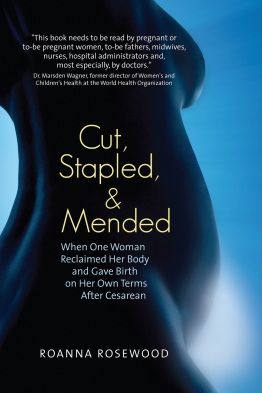
Book Reaction: Cut, Stapled, and Mended

To be honest, I wasn't sure what to expect from Roanna Rosewood's memoir, Cut, Stapled, and Mended. After it arrived I actually wondered if I should have agreed to review it, because I have so many things to read, things to think about, and interests that are calling me---do I really need to read a memoir about someone's cesareans? I've already read so many books about birth, do I really want to read another one? Well...the answer was YES, I did need to read it. After I finished the book, I felt almost speechless at how deeply it had touched me. This book was a surprise all the way through, from the opening Orgasmic Amazon Queen sex scene, to a session with a psychic healer who tapped in to Roanna's past life abdominal wound, to her dogged quest to open herself to her own feminine wisdom, to her birth experiences---all soul-shattering in their own way---this book touched me profoundly. I was shocked to find myself with tears in my eyes at many different points and eventually truly unable to put it down.

Orgasmic Amazon Queen notwithstanding, Roanna comes across as a practical and down-to-earth narrator, who in her quest to understand herself, her body, her inner wisdom, and her birth experiences, makes a decidedly not down-to-earth personal journey through a variety of healing modalities and nontraditional experiences and perspectives. I really loved the balance she struck between the spiritual and metaphysical experiences she describes and the nitty-gritty reality of doing this thing, giving birth. In a perfect example of what I mean, she writes:
You think I would run out of poop but I don't. It's endless poop. 

My ego, having (literally) had enough of this shit, quits. It gets up and walks right out the door. What is left of me poops in the tub. Looking down, I say, 'ewwwww.' I say it as if it wasn't me who just shat in the tub. I say it as if I just happened to come across poop in my bath one day. 'Ewwww' or not, I'm never getting out of the tub ever again. If this tub were full of nothing but shit mud, I would still stay right here (p. 144).
And, just a few pages later, the experience I already quoted in a prior post:
Only then does the Divine come, taking my body as her own. I am no longer alone. There is no fear…I experience completeness. I find religion. Infinity is tangible. Generations of children, their dreams, passions, defeats and glories—they all pass through me, converging here, between my thighs… (p. 146-147).
via Thesis Tidbits: Cut, Stapled, and Mended | Talk Birth
Despite planning homebirths, Roanna experiences two cesareans and her journey towards VBAC is an arduous one:
Deep inside, I feel the screams of birth echoing off the sides of my skull. Softer and softer they fade, becoming a faint whisper, then disappearing completely.
I open my mouth. 'Please,' I whisper-scream-beg-cry, 'please come back.'
She does not.
I am, once again, mortal. (p. 155)
While I would likely proceed with some degree of caution if reading this memoir as a pregnant first-time mom, there is much to be learned from Roanna's experiences. Her narrative is rich, deep, compelling, scary, dramatic, poignant, and powerful. I highly recommend it!

--
Disclosure: I received a complimentary copy of this book for review purposes. Crossposted at Talk Birth.

Saturday, October 5, 2013

Film Reaction: Birth Story

bs_header_f1
(Crossposted at Talk Birth)
 
inamayteaches
Prenatal visit
I have never met anyone with more than a passing interest in birth activism who has not heard of Ina May Gaskin. She isn’t referred to as a the world’s most legendary midwife for nothing! But, how did she get this way? The new documentary film, Birth Story, helps explore that question.

“The feature-length documentary BIRTH STORY: INA MAY GASKIN & THE FARM MIDWIVES tells the story of counterculture heroine Ina May Gaskin and her spirited friends, who began delivering each other’s babies in 1970, on a caravan of hippie school buses, headed to a patch of rural Tennessee land. With Ina May as their leader, the women taught themselves midwifery from the ground up, and, with their families, founded an entirely communal, agricultural society called The Farm. They grew their own food, built their own houses, published their own books, and, as word of their social experiment spread, created a model of care for women and babies that changed a generation’s approach to childbirth.

Forty years ago Ina May led the charge away from isolated hospital birthing rooms, where husbands were not allowed and mandatory forceps deliveries were the norm. Today, as nearly one third of all US babies are born via C-section, she fights to preserve her community’s hard-won knowledge. With incredible access to the midwives’ archival video collection, the film not only captures the unique sisterhood at The Farm Clinic–from its heyday into the present–but shows childbirth the way most people have never seen it–unadorned, unabashed, and awe-inspiring.” 

inamaystephenI really enjoyed Birth Story. It skillfully weaves together vintage footage, commentary, and births with a present day shadowing of Ina May in her natural environment: at the Farm. The documentary shows her working in her kitchen, eating, talking to her husband, watering plants, riding her bicycle, teaching workshops, training midwives, going to prenatal visits, and finally, attending a very hands-off gentle waterbirth. It also lets us peek at images from the early days of The Farm community, the caravan of buses, the dreams of Stephen Gaskin and the “hippies” who followed him to Tennessee. Birth Story is not just a film about Ina May though, it chronicles the experiences of several other Farm midwives as well, and I loved hearing the commentary and opinions of the less-famous midwives who helped transform the birth world.
I found footage of Ina May with Stephen to be particularly poignant and very much enjoyed the vintage photos and footage. I also find it interesting how The Farm began because of Stephen’s leadership and ideas and yet Ina May took off as the ongoing famous person in the family. Of Stephen, Ina May explains: “He thought women we supposed to be uppity—this was great relief, I didn’t like being held down.”

Ina May describes her own first birth explaining that in typical birth climates, “there’s nothing about the special energy of birth and that’s kind of the most important thing…I felt like I was doing something sacred.” She also makes the basic and crucial point that the number one rule of maternity care should be Be Nice and laughs as she asks us to consider how just those two words could change maternity wards. There are only a handful of actual births in the film, three of which are from sometime in the 1980′s. We see a breech birth (a lot more hands-on than I think of present-day midwifery practice) and a shoulder dystocia, both rare occurrences in birth films. We also see brief footage of Ina May’s Safe Motherhood quilt project and a brief discussion of disparities in maternal mortality rates.

inamayandbabyAnother highlight of the film for me was midwife Pamela, whose birth we also see on-screen. She is shown telling us about an early birth she attended saying, “I fell in love with women. How can you see someone be so strong and not fall in love?” Exactly. My doula and friend, Summer, who watched the film with me, developed her reaction to this quote in a lovely blog post and it reminds me of my own past post about my own former midwife who helped me see that midwife means loves women. Ina May explains that she learned how to be a midwife by allowing herself to be instructed by the women themselves and then she trained other midwives. As I watched Birth Story I found myself feeling a little sad, nostalgic, and bittersweet, because I feel like the world that these beautiful midwives envisioned has yet to really be birthed and that in some ways we’ve gotten so far away from the relationship-oriented and community living/engagement model upon which The Farm was based.

My initial feeling as I watched the film was that it would be primarily of interest to people already very familiar with Ina May, thinking that it  may not appeal to or interest “regular” people. However, the friends I viewed the film with had totally different perspectives. One friend told me she thought her husband would really have liked the documentary, particularly for the emphasis on community. The one husband who was present reported that he thought everyone should see the film and not just people who are already “birth junkies.” So, I stand corrected, and will now say that Birth Story has the capacity to engage with many people!

In 2007, I had the opportunity to listen to Ina May speak in person at the La Leche League International conference in Chicago. She talked about sphincter law and made the association with our bodies’ capacity for bowel movements and women’s physical capacity to rebound from childbirth. I will never forget her saying: “I don’t know about you, but my butt closes back up after I poop.” That summed her up for me: plainspoken, real, matter-of-fact, and practical. She’s a legend!

100_0564
Starstruck? Oh, yes I am. My husband said, “these people are like your *celebrities.*"

Disclosure: I received a complimentary screening copy of the film for review purposes.

Friday, September 21, 2012

Book Review: Pushing for Midwives


Book Review: Pushing for Midwives: Homebirth Mothers and the Reproductive Rights Movement
by Christa Craven
Paperback: 232 pages
Publisher: Temple University Press; 1 edition (October 28, 2010)
ISBN-13: 978-1439902202

Reviewed by Molly Remer, Talk Birth

Mainstream feminist groups have been slow to recognize the right to reproduce along with the right to be free from reproducing. A focus of the second-wave women’s movement was shaking off motherhood as what solely defined womanhood. So perhaps there has been a reluctance to watch over the process that makes women mothers. –Jennifer Block quoted in Pushing for Midwives
Framed as a health policy concern, Pushing for Midwives assesses the homebirth movement and midwifery activism in the context of the reproductive rights movement. The focus of the book is on legislation in Virginia, but is still of relevance and interest to activists from other states. Craven also tackles complicated topics that are often ignored in homebirth and midwifery texts, addressing issues of race, privilege, and socioeconomic status and the impact on access to care. She also takes a solid look at issues of political and religious diversity within the homebirth activist community.

Written in a densely academic style evocative of a dissertation, Pushing for Midwives, became tedious and dry in places and took a long time to finish reading. The very narrow focus on Virginia, while still applicable to other states, became tiresome by the final chapters.

I particularly enjoyed Craven’s exploration of the history of consumer activism in midwifery as well as the consideration of homebirth in the larger context of women’s health activism. I appreciated her exploration of the feminist movement and how it has historically neglected issues of birth advocacy and reform, while also looking the current relationship between feminism and midwifery activism, particularly how birth advocates choose to self-identify. Women’s health activists and midwifery advocates will likely find a lot of food for thought in the pages of Pushing for Midwives.


Disclosures: I received a complimentary copy of this book for review purposes.
Amazon affiliate links included in book title and image.

Monday, April 2, 2012

Book Review: Into These Hands

Into These Hands: Wisdom from Midwives
Geradine Simkins
Paperback, 300 pages
Published by Spirituality & Health Publisher, 2011
ISBN: 9780981870854
Wisdom from Midwives
Reviewed by Molly Remer, Talk Birth

Into These Hands is an amazing anthology of midwives’ retrospectives about their careers and midwifery journey. You won’t find birth stories here–this is book about women’s lives and journeys to midwifery. A book of midwife stories–how women are birthed as midwives, rather than about births they attended–Into These Hands is great reading for aspiring midwives or for currently practicing midwives who wish to feel a sense of solidarity with their sisters. There are many paths, many lessons, many voices and each midwife clearly loves women and has a passion for birth.

From the press release:

We are eager for you to meet some modern-day wise women, healers, revolutionaries, and reformers. Into These Hands, Wisdom from Midwives© is a comprehensive anthology of the life stories of 25 remarkable women who have dedicated their lives and careers to the path of social change through midwifery. These exemplary midwives are all over 50 years of age with 25-40 years in the field. Collectively, they have over 800 years of experience and have assisted in over 35,000 births.

The midwives whose voices are included in the anthology come from diverse backgrounds, training, experiences, and range of practice settings. Quite a few of the stories are from “bridge club” members–women who began as direct entry midwives and later became CNMs. These midwives have a foot in both worlds and insight into the politics of the profession. In general, Into These Hands is a good look at the politics of midwifery both past and present. Almost all of the midwives in the book have homebirth roots or orientation.

Since there are lots of voices represented, the tone or style of some stories is more compelling than others. Some within-story chronology jumps were a little confusing and there were a couple of stories in which I had to do some re-reading for clarity.

Into These Hands is likely to be of particular interest to midwifery activists, aspiring midwives, or current/retired midwives and may hold less appeal for general birth enthusiasts, doulas, or childbirth educators. The stories are rich, insightful, thought-provoking, and diverse and they brought tears to my eyes several times. This book is a treasury of women’s wisdom and a powerful legacy for the generations of women to follow.

20120402-120957.jpg

(An indicator of how much I like a book is how many page corners I turn down in order to come back to re-read those sections and write blog posts based on them/share quotes/etc. This is Into These Hands last night as I was finishing it...;-D)

Disclosure: I was provided with a complimentary copy of the book for review purposes.

Wednesday, March 21, 2012

Book Review: More Than a Midwife

More Than a Midwife: Stories of Grace, Glory, and Motherhood [Paperback]

by Mary Sommers
MavenMark Books (HenschelHAUS Publishing) (October 1, 2011), 148 pages
ISBN-13:978-1595981066

Reviewed by Molly Remer, Talk Birth

More Than a Midwife is a thoroughly delightful little volume by experienced and resourceful midwife, Mary Sommers. One of the things that makes the book particularly distinctive is the impressive diversity of Mary’s work experience. The book includes stories from her work as a midwife in urban Chicago as well as in Africa and Mexico. As always, glimpsing the dire situations facing birthing women cross-culturally is a sobering reminder of the immense challenges international midwives face with few physical resources—they accomplish an amazing level of care with only their heads, hands, and hearts.

Each story shared in the book is selected with care and has an important message to share. The stories are about unique women and their unique births and what Mary (and the reader) can learn from them. From empowering and exhilarating, to difficult and heartbreaking, particularly notable are the stories that remind us all to treat every woman with dignity and respect, regardless of her life’s circumstances or choices. Mary is clearly a midwife who loves women and birth and practices with sensitivity, respect, and positive regard.

More Than a Midwife is a slim paperback. It is nice size to hold easily and the stories are short and easy to read in small chunks of free time. It is occasionally erratic in the organization/flow of a story and in a few of them I had to re-read segments to understand chronology. However, this was a negligible issue in the context of this thoroughly enjoyable small book.

Mary Sommers has written a true gem of a book. I feel honored to have read More Than a Midwife and I highly recommend it to anyone interested in birth, homebirth, midwifery, or women’s health. Most excellent!

Disclosure: I was provided with a complimentary copy of the book for review purposes.

Tuesday, September 6, 2011

Book Review: Evolve…a woman’s journey


Book Review: Evolve…a woman’s journey
by Patrick Stull
Stull Visual Arts, 2011
Hardcover, 164 pages, $44.95
Also available as an iPad app and as an iBook in Itunes for $9.99.
http://www.patrickstull.com/books/

Reviewed by Molly Remer

A combination of stirring photography celebrating the creative journey of pregnancy and lyrical ode to women, Evolve is a unique book presented by artist Patrick Stull. The author-photographer’s love, respect, and honor for women shines through on every page. The photographs are arresting and dramatic and the prose is poetic and beautiful. The book is part of a multimedia exhibit taking place in 2012. I would love to see the full exhibit, which involves full body casts as well as images and voice recordings.

Why would a man prepare a project such as this? According to his introduction, due to “this insatiable desire to be part of something that excludes me…I have found something within me that one might call love, though I think it is more a sense of attachment to something that makes me whole. I have fallen in love with this creature and she has left her imprint on my being, casting me out to share the love—the humanity I have found.” Later he also shares that: “I have discovered nothing more stunning, nothing more emotionally stirring, nothing more intriguing than a woman as she creates life.” He also has an activist purpose behind his work, asserting that one mission of the Evolve project is to help people recognize the strength and value that all women possess. Stull states, “I also want people to consider the daily injustices to women and children all over the world, and how often they suffer the greatest costs of conflict. Why are women treated so cruelly?”

The early photographs shared are the faces of the women we follow throughout the rest of the book. A short snippet of information about the woman’s life accompanies each portrait. One woman is a midwife and several mothers had homebirths and/or hired doulas or midwives for their births. Evolve is a high quality hardback book that would be a great addition to a birth center waiting room or midwife’s office. If the price for the hardback book is out of your budget, luckily there is an affordable iBook version available.

The overwhelming message received through Evolve is of pregnancy as an active process. The pictures are very active and dynamic in feel, celebrating form and motion. Evolve is not a book of “belly pictures,” it is a book about women and their lives in the act of creation.

Disclosure: I received a complimentary copy of this book for review purposes.

Friday, June 17, 2011

Happy Father's Day!


For in the child lies the future of the world. Mother must hold the baby close so that he knows that it is his world. Father must take him to the highest hill to see what his world is like.

This quote came from the end of the touching Father's Day Flashmob in Denver video organized by Dads Adventure. Make sure to check out the associated article The Dignity of Being a Dad and read about the new brotherhood of dads initiative.

Here are some previous father-specific posts from the CfM blog:
Fatherhood challenges us, but it also enlarges us and reshapes our perception of what is important in the world around us. As we take stock of this new world, we find that doing our job as a dad is inherently honorable and respectful, and brings to us the dignity that goes with the territory. Far from being emasculating, being a dad makes us men in the finest sense of the term. --Dads Adventure

--
Molly
CfM Blogger

Sunday, May 22, 2011

Book Review: Arms Wide Open: A Midwife’s Journey

Book Review: Arms Wide Open: A Midwife’s Journey

By Patricia Harman
Beacon Press, 2011
ISBN: 978-0807001387
324 pages, paperback, $16.47 (Amazon)
http://www.beacon.org

Reviewed by Molly Remer, MSW, ICCE, CCCE
http://talkbirth.wordpress.com

I very much enjoyed Patricia Harman’s first book, The Blue Cotton Gown, and was delighted to learn about her new memoir, Arms Wide Open which is, in a sense, both a prequel and sequel to her first memoir. The first half of Arms Wide Open chronicles Patsy’s experiences with homesteading and communal living as a young hippie mother in the 1970’s. It also explores her thoughts and experiences with peace activism and her passion for an eco-friendly life. During this time, she attends her first birth and dives into her midwifery journey and eventually becomes a CNM practicing with her hippie-farmer-turned-OB/GYN husband in West Virginia. Her experiences with their years in a joint women’s health practice are described in The Blue Cotton Gown. Readers who, like me, wondered what happened where The Blue Cotton Gown left off, can find out in the second half of Arms Wide Open, which is a narrative of Patsy’s ongoing work with women through 2009 and includes her emotional painful moments in her marriage, as her husband struggles with fears of another lawsuit as well as with chronic pelvic pain patients who abuse his trust (chronic pelvic pain is a specialty of their practice).

I did feel as if there was a large chunk of story missing as the book somewhat abruptly skips from 1978 to 2008. We miss learning about any of Patsy’s experiences in nurse-midwifery school, nor do we learn much about her practice when she was a CNM attending births. The book transitions from her years as a self-taught midwife considering going to school to become a CNM, straight to her present-day years as a CNM in a private women’s health practice.

Harman’s writing style is lyrical and engaging as well as candid. The book is based on personal journals and reading it feels like eavesdropping on someone’s very private thoughts and feelings. The book is much more of a look at a woman’s feelings about her life, than it is a “manifesto” about birth or about the practice of midwifery. In this manner, I feel like you receive a much more complete picture of a midwife’s life and journey, rather than reading a sequence of birth stories. Patsy has a lot of life in addition to birth. While definitely not a “feel good” book, Arms Wide Open is a deeply touching and very honest exploration of one woman’s personal journey in life, love, motherhood, and midwifery.

--

Disclosure: I received a complimentary copy of this book for review purposes.

Monday, September 13, 2010

Book Review: Survivor Moms


Book Review: Survivor Moms: Women’s Stories of Birthing, Mothering and Healing after Sexual Abuse
By Mickey Sperlich & Julia Seng
Motherbaby Press, 2008
ISBN 978-1-89-044641-3
245 pages, softcover
http://www.midwiferytoday.com

Reviewed by Molly Remer, MSW, CCCE
http://talkbirth.wordpress.com

Past sexual abuse is an unfortunately common experience for women. Anyone who works with women of childbearing age should be mindful and informed of the effects of an abuse history on the woman’s experience of pregnancy, birthing, and mothering. Indeed, I consider this awareness to be a fundamental professional responsibility. Enter Survivor Moms, published by Motherbaby Press. This book is an incredibly in-depth look at the experiences and need of survivors of sexual abuse during the childbearing year.

One of the best and most unique features of the book is the “tab” format used for much of the clinical, research-based, or fact-based content in the book. Rather than lengthy chapters reviewing research and analyzing the phenomenon, textboxes containing quick facts and reference material are printed in the margins of many of the pages. The bulk of the narrative information in the main body of the text is then in the voices of mothers themselves, interspersed with commentary by the authors linking concepts, explaining ideas, and clarifying essentials. This is a powerful format that makes information readily and quickly available for reference as well as making the overall book very readable and approachable.

As someone with no personal abuse history who is currently pregnant, I did find the book to be a very emotionally difficult, intense, and almost overwhelming read at times. This is not a criticism in any way—sexual abuse is not a light or cheerful topic and it can be one that many people prefer to avoid. This is all the more reason for birth professionals to make a specific effort to be educated and informed.

Written both for mothers themselves and for the professionals who work with them, Survivor Moms is an essential part of any birth professional’s library. As noted in the book’s introduction, “We need to understand the impact of childhood abuse on birthing and mothering deeply, from hearing women’s stories. We also need to understand it broadly—from looking at the impact on samples and populations, on the body and on the culture.” Survivor Moms offers an accessible way of hearing those critically important stories and developing the necessary understanding to care compassionately for birthing women.

--
Disclosure: I received a complimentary copy of this book for review purposes.

Wednesday, September 1, 2010

Book Review: My Name is Mary Sutter


Book Review: My Name is Mary Sutter
By Robin Oliveira
Viking, 2010
ISBN 978-0670021673
384 pages, hardcover, $26.95

Reviewed by Molly Remer, MSW, CCCE
http://talkbirth.wordpress.com/posts

My Name is Mary Sutter is a new novel about a young Civil War era midwife who longs to be a surgeon, but is denied entry to medical school because she is female. Historical fiction has always been a favorite genre of mine, but historical fiction about a midwife? The best! After some initial chapters involving midwifery and family life, the main character, Mary Sutter, seeks work first as a nurse in desperately undersupplied and overworked Civil War hospitals and then directly on the battlefield following the soldiers with a cart of medical supplies. Mary is a strong female protagonist and there are some complicated male (doctor) characters as well. A couple of mild love stories serve as sub plots.

Midwifery quickly takes a back seat in the saga as Mary becomes a nurse on the bloody battlefields of the Civil War. However, her work continues to be informed by her midwifery experiences--for example she uses memories of turning malpositioned babies as inspiration for finding the right spot to amputate wounded legs.

Some famous historical figures like President Lincoln, Clara Barton, and Dorothea Dix make appearances in the tale. The slaughter on the (famous) battlefields is tightly wrought and makes you feel as if you’ve “been there.” The reader feels exhausted and battle weary right along with Mary. The novel is a third person narrative throughout, but it almost felt like a first person account—as if the author was writing from personal experience. Be prepared for a variety of personal losses for the main character.

Riveting, well constructed, and tightly paced, My Name is Mary Sutter is a gripping story of one woman’s tenacious will and her drive both to learn and to serve.

--
Disclosure: I received a complimentary copy of this book for review purposes.

Friday, June 18, 2010

Book Review: Breastfeeding Facts for Fathers


Since Father's Day is this weekend, I thought this was a perfect book review to share!

Reviewed by Molly Remer, MSW, CCCE
http://talkbirth.wordpress.com

Since partner support of a breastfeeding mother is one of the most important factors in breastfeeding success, the short book Breastfeeding Facts for Fathers is a valuable book indeed. Written in a clear, straightforward format, brief one-page sections address topics like, “why you want your baby breastfed,” “is formula really so bad,” “a happier, healthier mom,” “sex and the breastfeeding woman,” and “when breastfeeding is not advised.” There is also a brief segment about safe co-sleeping. These sections are followed by a brief FAQ addressing topics such as how often mom should breastfeed, how to know baby is getting enough milk, how long to breastfeed, nipple piercing, breast implants, alcohol, and breastfeeding in public.

As a quote in the book states, “Having a father is critical to the healthy development of a child. Being a father is critical to the healthy development of a man.” Providing breastfeeding information specific to fathers, Breastfeeding Facts for Fathers supports this healthy development of father, mother, and baby.

A Spanish edition, a low-literacy (abridged) version, an ebook edition, and a hospital edition (co-sleeping information omitted) of Breastfeeding Facts for Fathers are all available at various affordable prices from Platypus Media.

--

Disclosure: I received a complimentary copy of this book for review purposes.

Friday, May 21, 2010

Book Review: Brought to Earth by Birth


Book Review: Brought to Earth by Birth
By Harriette Hartigan
Motherbaby Press, 2008
ISBN 978-1-890-44642-0
93 pages, softcover, $25.95
www.motherbabypress.com

Reviewed by Molly Remer, MSW, CCCE
http://talkbirth.wordpress.com

Written by well-known birth photographer Harriette Hartigan, Brought to Earth by Birth is a lyrical ode to the power of birth and babies. The book feels like an extended “poem” expressed in both word and image. The emphasis of the book is the black and white photos of pregnant women, families, and newborns that grace the pages. There are several photos of women in labor and a couple of breastfeeding images. Surrounding the photos are carefully chosen quotes and gentle words.

Brought to Earth by Birth is separated into six “chapters” and contains several birth photos, but no crowning photos or any other photos that some may consider “graphic.” The book is short—under 100 pages—and some photos were familiar to me (cover images in birth publications). The concluding emphasis is on the newborn, the one who is, after all, “brought to earth by birth.”

The book would make a nice gift for a midwife, doula, or childbirth educator and is a nice “waiting room” book to browse through. It would also make an inspirational mother blessing gift. As the author states, “The experience of birth is vast. It is a diverse tapestry woven by cultural customs, shaped in personal choices, affected by biological factors, marked by political circumstances. Yet the nature of birth itself prevails in elegant design of simple complexity.” Brought to Earth by Birth is a lovely glimpse of some strands of that elegant tapestry.

--
Disclosure: I received a complimentary copy of this book for review purposes.

Friday, May 14, 2010

Film Review: Natural Born Babies


Film Review: Natural Born Babies
South Coast Midwifery, 2009
DVD, 24 minutes, $24.95
www.naturalbornbabies.com

Reviewed by Molly Remer, MSW, CCCE
http://talkbirth.wordpress.com

This lovely short film produced by a midwifery service in California, is a great “ad” for the benefits of homebirth and of midwifery care. Natural Born Babies has a very clean, fresh, and contemporary feel and features a multicultural collection of homebirth families talking about their experiences in front of a white screen. Something that is particularly striking is that some of the people speaking with love and enthusiasm about their midwives and their birth experiences include a cardiologist, an anesthesiologist, and an ER physician!

The first part of the film is titled Interventions and features both men and women speaking about birth, referencing how pregnancy and birth are treated like medical conditions and including a lot of discussion about the prevalence of cesareans. The point is made that, “no epidural can replace human touch.” The second part is titled The Birth Specialists and points out that OB/GYNS are pathology specialists, whereas midwives are trained in normalcy—“we take low-risk women, and keep them low-risk.” Midwives are specialists in normal pregnancy and birth. Because of the film’s emphasis is wholly on out-of-hospital birth and hospitals are critiqued very soundly, hospital-bound couples viewing the film may find that it causes their defenses to rise.

Several of the parents are holding their babies as they speak and a CNM speaks briefly as well (citing both ACNM and MANA). The CNM manages Orange County’s only accredited birth center. I enjoyed the presence of a bio-physicist dad originally from Holland saying, “everyone I know was born at home” and noting that “you give birth the same way you live.” Several of the couples speaking do refer to the father as “delivering” the baby, which is a long-term pet peeve of mine.

Special features include a 10 minute version of the film, an outtakes section, and a look inside the South Coast Birth Center. At the end of the film we see that one of the couples is the director/producer of the film.

Natural Born Babies is a fast-paced film and though it is filmed in a “talking heads” format, it cuts quickly from person to person, thus keeping the viewer engaged. If you are looking for an informative video that is homebirth and midwifery friendly, but that does not include any birth footage, this would be a good addition to your library.

--
Disclosure: I received a complimentary copy of the film for review purposes.

Friday, May 7, 2010

Happy Mother's Day!


There are a lot of events to honor in May! International Day of the Midwife was May 5th and Mother's Day is rapidly approaching on May 9th. May is also International Doula Month and Pregnancy Awareness Month. And, Birth Activist is having a Mother's Day blog carnival.

So, I found it fitting this week to share a book review about a nurturing little book for mothers:

Book Review: 25 Ways to Joy & Inner Peace for Mothers
By Danette Watson & Stephanie Corkhill Hyles
Watson & Corkhill Hyles, 2006
ISBN 0646-46588-0
84 page hardcover book & 60 minute CD set, $24.95
http://www.awakenyourbirthpower.com

Reviewed by Molly Remer, MSW, ICCE
http://talkbirth.wordpress.com

Consisting of a book and CD, 25 Ways to Joy & Inner Peace for Mothers contains 25 short breathing meditations with accompanying whimsical, colorful drawings. The meditations are on topics such as “surround yourself with mother energy,” “embrace change,” “feel reverence,” and “trust the rhythm of your baby.”

The final third of the book contains breathing tips, tips for using the meditations in life, and then “10 Healing Practices for Mothers” that are a very nice addition. This segment is followed by “Questions for Inner Exploration” that include journaling questions and prompts based on each of the meditations.

It is not clear at first glance, but 25 Ways is designed for mothers of newborns and infants, not mothers of older children (though, of course, most of the meditations could be adapted to apply to older children). The addition of “new” to the title would have been a useful clarifier.

Inspiring, empowering, and renewing, 25 Ways to Joy & Inner Peace for Mothers is a lovely and nurturing little manual that would make a nice blessingway gift for a pregnant or a congratulations gift for a special new mother.

--
Disclosure: I received a complimentary copy of this book for review purposes.
Review originally published in the CAPPA Quarterly, April 2010.

Friday, April 23, 2010

Book Review: She Births


Book Review: She Births: A Modern Woman’s Guidebook for an Ancient Rite of Passage
By Marcie Macari
Infinity Publishing, 2006
ISBN 0-7414-3390-7

255 pages, softcover, $23.95
http://www.shebirths.com

Reviewed by Molly Remer, MSW, ICCE

http://talkbirth.wordpress.com

She Births is a book that “goes beyond” the average birth book. It is a particularly good read for mothers having subsequent children—perhaps for a woman who is well read in the physiology and stages of labor and who wants to dig deeper into the emotional and spiritual meaning of giving birth. It is also helpful for first-time mothers, though I felt that there was a lot of content that seemed to assume the reader had already given birth (and was perhaps reading this book to reflect, process, and prepare for future births).

The emphasis of She Births is on childbirth as a rite of passage and as an opportunity for spiritual growth and personal transformation. There is a lot of content that has a very “New Age” flavor. While I personally do not mind—and actually enjoy—this framework, other readers may consider some of the sections to be offputting.

Each chapter ends with a short chapter-topic meditation and several pages of related journaling exercises.

The book contains a higher than average number of minor typographical errors, as well as odd mid-sentence capitalizations, and too-short dashes between ideas. Persistent capitalization of words such as Birth and Spirit were a bit distracting. The book contains a variety of empowering birth stories, but none of them have attribution, making it difficult to identify who was giving birth. (The author? The woman in the previous story?) It was hard to grasp who was the “I” reflecting and sharing in each story.

She Births has several particularly wonderful passages that are well worth quoting and it also has a lovely cover. It is a passionately written book that is very dynamic and “alive” to read. The book is strongly written—the author does not mince words nor attempt to “balance” her perspective and this can be a refreshing approach. She Births also raises thought-provoking questions such as, “The way a society views a pregnant and birthing woman, reflects how that society views women as a whole. If women are considered weak in their most powerful moments, what does that mean?”

Disclosure: I received a complimentary copy of this book for review purposes.

Friday, April 9, 2010

DVD Review: Dance of the Womb: Belly Dance for Pregnancy and Birth


DVD Review: Dance of the Womb: Belly Dance for Pregnancy and Birth
By Maha Al Musa, 2009
Red Polar Pictures
164 minute DVD, $49.95 (AUS)
http://www.bellydanceforbirth.com

Reviewed by Molly Remer, MSW, ICCE
http://talkbirth.wordpress.com

Maha Al Musa has created a remarkable treasure for the birth world—an easy-to-follow, beautifully presented, step-by-step instructional bellydancing DVD called Dance of the Womb. Maha’s interest in Middle Eastern Dance was sparked by her Palestinian/Lebanese roots and she brings a lot of love and authenticity to her presentation of the dance techniques. Maha has also published a gorgeous companion book, also titled Dance of the Womb (see previous review).
Dance of the Womb contains a 45-minute dance stretch warm-up. The exercises are comprehensive, gentle, and easy to follow. There are also six instructional dance technique chapters that cover specific beginning bellydance movements.

One of the special treats of this DVD is the included 50 minute video about Maha’s own homebirth journey with her third child (at age 46!). It also contains interviews with several homebirth midwives. The still photographs and birth footage are beautiful and brought a tear to my eye several times! Another bonus feature is a seven minute guided relaxation exercise.

Dance of the Womb is a great introduction to the basic physical elements of prenatal belly dance and also to some the spiritual and rhythmic aspects of giving birth. The DVD is a gentle and nurturing experience for both pregnant women and the women who serve them.

---
Disclosure: I received a complimentary copy of this DVD for review purposes.

Friday, March 26, 2010

Birth Book


My review of the classic book Birth Book by Raven Lang was posted on the CAPPA blog this week.

Just a reminder that the book is available in a limited edition reprint from CFM here! The book is very hard to find on the secondary market.

--
Molly
CfM Blogger

Friday, March 12, 2010

Book Review: Get Me Out

Book Review: Get Me Out: A History of Childbirth From the Garden of Eden to the Sperm Bank
By Randi Hutter Epstein, MD
W.W. Norton & Company, 2010
ISBN 978-0-393-06458-2
302 pages, hardback, $24.95
http://www.randihutterepstein.com/

Reviewed by Molly Remer, MSW, ICCE
http://talkbirth.wordpress.com

Since it shares a subtitle about the history of childbirth, I expected the new book Get Me Out to be very similar in content to the recent book Birth Day by Mark Sloan or to the book Birth by Tina Cassidy. I wondered how much more could possibly be reported about the history of childbirth. It turns out there is plenty more and I was delighted to discover that Get Me Out stands alone as a unique and interesting contribution to books of this genre.

Written by a physician and mother of four, Get Me Out focuses on some very recent elements of birth history including assisted reproductive technologies (ART), ultrasound, and freebirth, subjects not addressed in the books referenced above. Aside from familiar content about things like the Chamberlen brothers and the Twilight Sleep movement, the remainder of the text was fresh and engaging. Part one included an interesting and disturbing chapter about Marion Sims and his research and experiments with fistula repair on enslaved women. A later chapter explores Sims’ research with artificial insemination (this time with middle class white women). In fact, the latter half of the book contains an extensive historical look at artificial insemination, moving into present day history including an exploration of sperm banking and cryo-preservation of eggs.

Unique among birth history books is Epstein’s chapter on freebirth (more commonly known as “unassisted childbirth”) followed with a chapter about ultrasound including content about 4D and “novelty” ultrasounds. There is also a chapter exploring DES and its effects on reproduction.

Also different than Birth Day and Birth, is the total absence of memoir or personal reflective content. Epstein is a medical journalist and Get Me Out is written in that voice. There is a light, personal tone to the text, but nothing personal aside from occasional descriptions, observations, or quotes from interviews with sperm bank mangers (for example). I found myself feeling a little curious about her personal history of childbirth, an element freely interspersed throughout the texts of other recent birth history books.

As the author says, “…the way we give birth is a story about our deepest desires and our fundamental concerns about life, death, and sex.” Get Me Out is a fascinating tale focusing on our collective, cultural story about birth in the late nineteenth and twentieth centuries, as well as dip into the story that continues being written today.

--
Disclosure: I received a complimentary copy of this book for review purposes.

Friday, March 5, 2010

Book Review: L’Mazeltov: Your Personal Guide to Jewish Childbirth Education

L’Mazeltov: Your Personal Guide to Jewish Childbirth Education
By Pamela Nadav
L’Mazeltov, Inc. 2008
Softcover, 248 pages, $18.00
ISBN: 978-097786610-6
www.lmazeltov.org

Reviewed by Molly Remer, MSW, ICCE
http://talkbirth.wordpress.com

The title of the new Jewish childbirth education book L’Mazeltov combines “two important Jewish symbolic expressions—L’Chaim (To Life) and Mazel Tov (Good Fortune).” The first half of the book consists of basic childbirth education and preparation. The second half is about "Jewish Life Cycle Education." The strength of this book is the fusion of the two.

The childbirth education section was very conventional and conservative. I was surprised by some of the advice offered such as, “Always follow your doctor’s advice in all matters related to your pregnancy, labor and delivery” and in the section about anesthesia, “All of these modern technologies are designed to assist you in having the best possible birthing experience, and are considered to be relatively safe.” Personally, I feel like an important piece of childbirth education is encouraging pregnant couples to be informed birth consumers. There was no element of this perspective within L’Mazeltov.

The book includes some population-specific pregnancy information such as a short section on Jewish genetic diseases and testing.

There is a nice recipe section at the end of L’Mazeltov. I was inspired to make some delicious Challah bread for my family! There is no index, resource list, or glossary of terms (as a non-Jewish reader, many words were unfamiliar to me—the author does a good job defining many within the body of the text, however).

Despite my wish for a more creative and evidence-based approach to the birth education portion, this book is a one-of-a-kind contribution to birth literature, covering both the “oys and joys” of preparing for parenthood. What a resource for Jewish couples expecting their first baby! “There is such a special sweetness in being able to participate in creation.”

--
Disclosure: I was provided with a complimentary copy of this book for review purposes.

Review first published in The CAPPA Quarterly, January 2010.

Friday, February 26, 2010

Book Review: Birth Day


Book Review: Birth Day: A Pediatrician Explores the Science, the History, and the Wonder of Childbirth
By Mark Sloan, M.D.
Ballantine Books, 2009
ISBN 978-0-345-50286-5
370 pages, hardcover, $25

Reviewed by Molly Remer, MSW, ICCE
http://talkbirth.wordpress.com

Written in a fast-paced journalistic rather than academic style, Birth Day is a biological, historical, and sociocultural look at birth in our species, highlighting the experiences and skills of the fetus and newborn infant. The focus of Birth Day is on childbirth, but as a pediatrician, the emphasis of the journey in this book is on the baby and its development, skills, and remarkable adaptations to the womb and to life on earth. The book contains frequent references to evolution, which is not a concern to me, but may be to other readers.

The author’s personal experiences and observations are interwoven skillfully throughout the book lending an engaging “human” component—I loved his wry and occasionally self-deprecating honesty and realistic sharing. We read about the births of both of his children (one a very long labor eventually with an epidural and the second a scheduled cesarean due to placenta previa), his experiences as a medical student, and his observations as a hospital and clinic pediatrician. Dr. Sloan has been present at over 3000 births as a hospital pediatrician and 20 births as the baby “catcher” (medical school OB rotation). There is no real mention of homebirth, but occasional, supportive references to CNMs and to doulas.

The author has a healthy respect for the process of birth, noting in his conclusion that “…the most striking thing to me after all these years is how often such a complicated process goes right.” As a breastfeeding counselor, an element that I loved in this book was the author’s complete acceptance and integration of the importance and normalcy of the birth-breastfeeding continuum as well as the assumption of breastfeeding present throughout (bottles and formula do not make a single appearance throughout the 370 pages). This presentation was both very refreshing and completely appropriate.

The content of Birth Day was reminiscent of Birth by Tina Cassidy, with the primary difference being the emphasis on the infant’s experiences. There were occasional instances of questionable data such as, “An unattended breech birth, for example, is nearly always fatal to mother and child.” (?!)

Fast paced and often very funny, the author of Birth Day has a knack for explaining complicated concepts in simple terms and using effective analogies. I learned some new facts about the history of birth and was pretty captivated by the whole ride.

--
Disclosure: I received a complimentary copy of this book for review purposes.