Showing posts with label breastfeeding. Show all posts

Wednesday, January 23, 2013

Postpartum Survival Tips


324“In western society, the baby gets attention while the mother is given lectures. Pregnancy is considered an illness; once the ‘illness’ is over, interest in her wanes. Mothers in ‘civilized’ countries often have no or very little help with a new baby. Women tend to be home alone to fend for themselves and the children. They are typically isolated socially & expected to complete their usual chores…while being the sole person to care for the infant…” –Milk, Money, & Madness
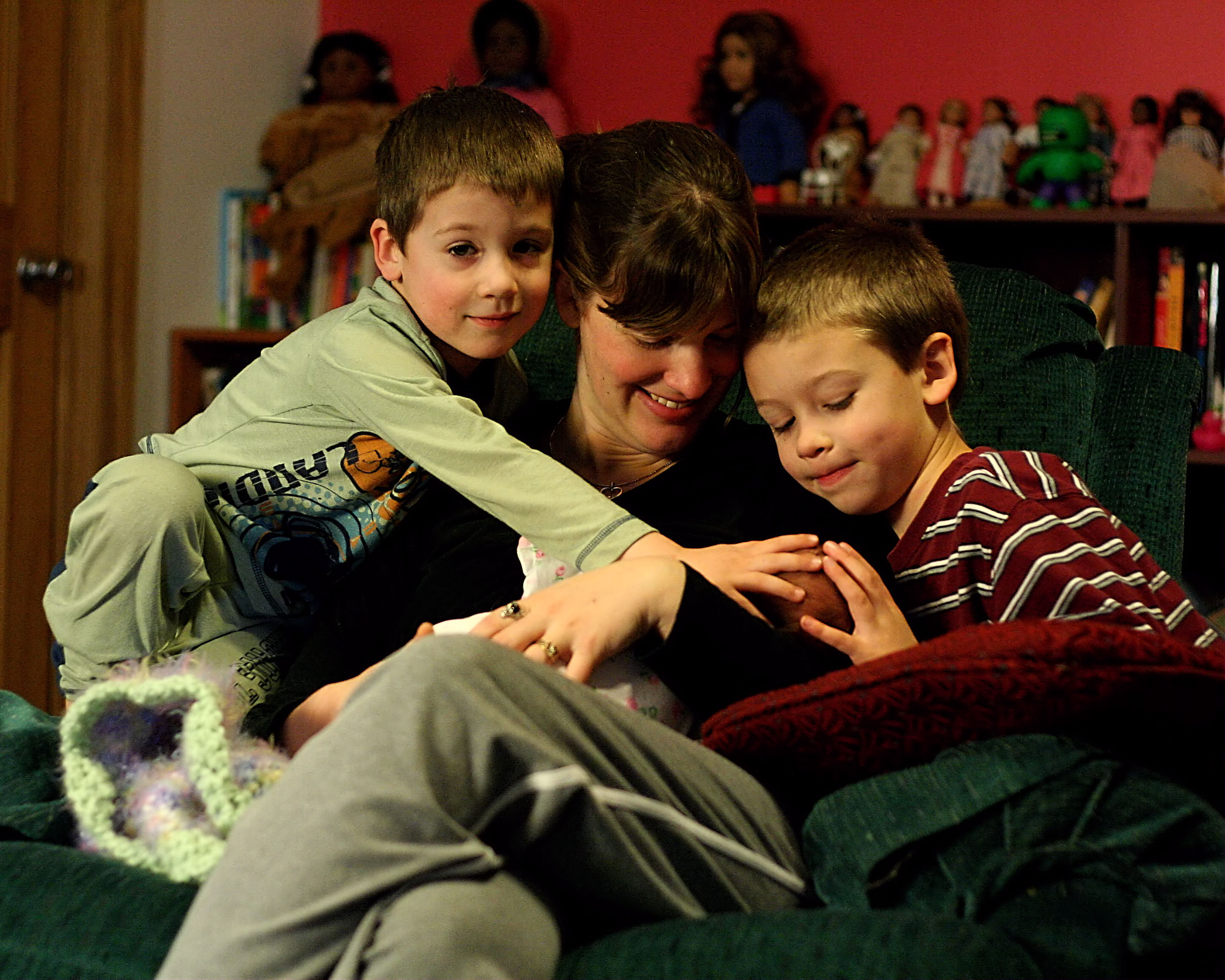
I recently shared this quote on my Facebook page and a reader responded expressing her fear at preparing to face this exact situation. I responded that it is an unfortunately realistic fear and suggested she check out some resources for postpartum planning that might help work through the fear as well as plan for a nurturing postpartum instead of a stressful one. She then responded that she has a very minimal local support system and that got me thinking about postpartum survival tips for when one’s local support system is limited…

My ideas:
  •  Suggest to your out of town friends and family that they contribute to a “babymoon” for you and all pitch in to hire a postpartum doula.
  • Tactfully remind people that even if they’re too far away to bring you a meal, they can certainly call up a local restaurant and order a delivery for you! I think a lot of us forget that is an option for a long distance family member (that we would bring food to if they were local). In my experience, getting enough food is a huge issue postpartum! I remember long distance friends having babies a variety of times and wishing I was close enough to bring them dinner. Duh. Many restaurants do, in fact, deliver food!
  • Be your own “best friend” by preparing and freezing meals and snacks now. I know I sound obsessed with food, but it is totally one the hardest things to take care of postpartum, but so important!
  • Put together a mama survival kit for yourself that you can then open up when you need it. Some ideas here and more ideas of variable quality here.
  • If you don’t have a sense of community work, actively work on building one—go to La Leche League meetings, Holistic Moms Network, Mothers of Preschoolers, Attachment Parenting International, or other mothers’ groups. Go BEFORE you have your baby if you can.
Other ideas for helpers:
  • In addition to my idea of ordering delivery for a postpartum family as a way of bringing them dinner long distance, is to order a dinner through the mail via the business Spoonful of Comfort. They will send fresh chicken soup, rolls, cookies, and a baby present via Priority Mail (packed with freezer packs). I send it with a note saying, “this is me, bringing you dinner!” Friendly tip from unfortunate personal experience: if you are doing this for a friend make SURE you enter THEIR address as the shipping address and not your OWN address, or you will then be forced to enjoy their postpartum meal and feel like a total idiot at the same time.
  • Don’t forget about other meals—breakfast = awesome. Muffins = awesome.
  • Pay it forward–I think sometimes people feel like they don’t know someone well enough to bring them food, or maybe they even do a mental “tally” and think, “well, she won’t be bringing me food ever, so why should I take time to bring it to her” or, “she didn’t make anything for me when I had my last baby, so I’m off the hook on this one.” When I had Alaina, a mother who had literally JUST moved to town and that I had not yet met, sent a hot breakfast casserole to me (that my lovely doula delivered to my lovely mother at the snowy end of my gravel road).  I think of that generosity when I bring a postpartum meal to a mama from whom I will never end up getting a reciprocal meal. Who cares. She needs it. You can do it!
  • Another doula commented on my post: “Do you know a mom that is about to have a baby? Or maybe a momma who just gave birth recently? Don’t even ‘offer’ just show up with a bucket of cleaning supplies, a bag of healthy food, and maybe something nice for her. Go tuck her in bed with baby, and get to work on her home.. When she wakes, she has nothing to do but nurse that baby. (If she has other kids, delegate chores with them, if to young, call mutual friends to sit for them! Our Mom’s need this, up through 6-9weeks pp, Mom’s need help, even longer for some. There is a reason the US has the highest Post Partum Depression issues in the developed world… Create your community! DO IT!” I would add that if you do not know mom well, do not plan to engage in a deep cleaning project and stay for a long time doing such project.
I also posted to the Citizens for Midwifery Facebook page asking for contributions for postpartum survival tips when your local support system is limited. What beautiful, helpful women we have on that page! While I didn’t get many suggestions specifically for minimal local support systems, I did get a nice collection of survival tip ideas:
  • Trust your own instincts. Many women have great advice but if your heart is telling you something else, go with it.
  • Craniosacral therapy… one session for you and one for the baby.
  • In addition to lots of suggestions to hire a postpartum doula, there were lots and lots and lots of shout-outs for placenta encapsulation. I echo it myself.
  • Get out of the house alone! For me, it’s been crucial to my sanity to leave my home, by myself, even if only for an hour or two between nursings. Just a Target run was therapeutic!
  • Kangaroo care for high needs babies.
  • Lots of mentions of it being okay to accept help and okay to ask for help.
  • A lot of new moms get really overwhelmed by family and friends coming by to see baby, and it’s important for them to remember that they can always put out a sign that says “mom and baby sleeping!” (even if they aren’t) anytime they need a break.
  • Watch only positive stuff without violence on TV (cooking shows, home improvement) as regular TV is really violent for new mamas and she may be watching more with all the nursing/healing.
  • Have homemade high protein frozen meals (and snacks) in the freezer before birth so anyone can warm them up for the household after birth. If breastfeeding, get much more rest than you think you need from day one to ensure an abundant milk supply (*note from Molly: it is true that prolactin receptors are “laid down” during the first days of breastfeeding. Breastfeeding “early and often” makes sure that there are an ample supply of receptors in your brain.)
  • Have a sign up sheet for family and friends to choose which chores to help with, gift certificates to a cleaning service, stocking up on disposable plates and dinnerware…
  • A new mommy group can be a life saver. Just knowing that other mommies are going through the same thing help
  • Food registries such as mealtrain and mealbaby. Not enough families know about these amazing and free services. (*note from Molly: we often use Care Calendar locally.)
  • Plan ahead and freeze several of your favorite freeze-able meals. Let the clothes be a little wrinkled. Use paper and plastic ware instead of worrying over dishes. Stay laying down first 3 days postpartum (preferably naked: it gives a certain message and is better for baby anyway) and the first week stay in pajamas. Enjoy frequent rest times, even if you can’t sleep.
  • Baby wearing….lots of time in bed, sleeping cuddling and feeding babe skin to skin…brest friend nursing pillow
  • Send a subliminal message to the limited visitors you’ll have (set limits early with partner) by wearing your robe for several weeks
  • Eat well, accept all offers of help and food, get out of the house alone!
  • I loved getting meals brought by friends, but I didn’t always want to socialize. So, someone to run interference, or maybe a drop-off location for leaving food. (*note from Molly: my doula was the perfect person for this job.)
  • Ask for help! No one will know what you need if you don’t speak up.
  • Don’t go without showering for more than four or five days. Brush your teeth once a day no matter what, even if it ends up being at a weird time. Take your vitamins/ herbal supplements/tea. HYDRATE! Nap with baby if you need to, arrange childcare for older siblings sometimes, but also listen to your instincts—one of my worst baby blues moments was with my third when my older two were gone and I wanted them home!
  • LOVE yourself, nap when you can , Yes you are doing it right, No it’s no ones business (breastfeeding/cosleeping/pumping etc.) allow opinions and advice to slide off, drink lots of water , eat small snacks/meals, love your baby look into their beautiful eyes and connect, skin to skin whenever even with dad or siblings (safely) cherish these moments they don’t last forever, the laundry will get done, the dishes will be get cleaned …
  • Take a “babymoon”. Put on a robe when someone comes to the door–even if you have real clothes underneath. Sleep when the baby sleeps. Don’t answer the phone. Remember, self-care is essential for you to be able to care for your baby.
  • I loved having herbal soaked pad (frozen) to wear afterwards, felt soooo good. Have easy one-handed snacks available and a BIG water bottle.
  • In those last few months of pregnancy I prepare meals to freeze (I start about month 5 or 6). I make up 6 weeks worth of dinners (they always last longer since we have a great church family and friends that bring us meals). After baby is born I can put 2-3 dinners in the refrigerator (to thaw) a few days before I need them. Then all I have to do is pop one in the oven and BAM….dinner’s ready. I love “Don’t Panic, Dinner’s In The Freezer” I & II. The recipes are amazing and all freeze well. Hope that helps!
  • Skin-to-skin in bed for as long as possible; 40 days of rest, recuperation, establishing breastfeeding, bonding, limited visitors, and limited activity; drink when the baby nurses; sleep when the baby sleeps; nurse on demand; learn to wear your baby; and use a peri bottle when peeing! A postpartum herb bath and massage are nice, too.
  • Hot water bottle for afterpains
  • Placenta encapsulation and WishGarden Herbs ReBalance tincture!
  • Chiropractic adjustments, ASAP
  • Call in your mom. My mom’s job after my second was born was to keep me fed and to spend some quality time with my older child.
  • Drag oneself outside and BREATHE! :)
  • Water…..hot tub, shower, steam, pool, raindrops, snow, sauna, bath, river, stream, ocean, lake! If you can, immerse yourself, if you cannot, imagine yourself floating :-)
  • Lots of water, lots of protein and healthy fats, placenta encapsulation and low expectations of anything other than bonding time with baby.
  • Don’t try to impress others with how quickly you can get up and going, even if you can, just take it easy!!!!
  • It’s not in the asking for help; its in the accepting…
Surround her with support!

Check out these previous posts:

Mothers Matter–Creating a Postpartum Plan

Planning for Postpartum

Some reminders for postpartum mamas & those who love them

and a great one for helpers written by my own doula:

The Incredible Importance of Postpartum Support

And, remember…

“The first few months after a baby comes can be a lot like floating in a jar of honey—very sweet and golden, but very sticky too.”
–American College of Nurse-Midwives

This post is crossposted at Talk Birth.

Thursday, August 4, 2011

World Breastfeeding Week: Impact of Birthing Practices on Breastfeeding


It is World Breastfeeding Week this week! I hope everyone has found a way to celebrate the event in their own communities, or is communicating about WBW with their networks, including social networks. When it comes to breastfeeding, birth matters! La Leche League has a free podcast available with Linda Smith (author of Impact of Birthing Practices on Breastfeeding). During the podcast she mentions midwives and also talks about doulas. Last year, I wrote an article about the birth-breastfeeding continuum and also another post about birth practices and breastfeeding.

In the past I've also written about Diane Wiessinger and her wonderful presentations about mammals, birth, and breastfeeding. So, it is also exciting to me that LLL has a free podcast available from Diane! The podcast is called, "What other mammals can tell us about nursing."

There are many more wonderful podcasts available for free on the LLLI website. What a great resource!

In my own community our local LLL Group is celebrating World Breastfeeding Week by hosting a family picnic in the park and a Big Latch On event. Here is more about WBW from La Leche League USA:

LinkLLL USA’s World Breastfeeding Week Celebration’s 2011 focus will be to:
  • Connect with other breastfeeding advocates.
  • Utilize the Big Latch On to bring awareness of breastfeeding and show solidarity with all nursing mothers.
  • Contact local communicators to help them raise awareness and offer our expertise.
  • Show how the mother/baby breastfeeding dyad is the beginning of lifelong communication.

Join with us in supporting WBWC 2011 and in communicating the importance of breastfeeding and the vital need for support available from La Leche League.

OBJECTIVES OF WORLD BREASTFEEDING WEEK CELEBRATIONS 2011
*To increase communication about breastfeeding in a variety of ways.
*To raise funds for La Leche League USA, with emphasis on local communities.
*To raise awareness that breastfeeding prepares humans for life.
*To raise awareness that the lack of breastfeeding affects the child, mother, community and health care systems.
*To raise awareness that La Leche League Leaders and Groups offer breastfeeding information and support to all.

I'd like to close with two quotes from Diane Wiessinger about the importance of a physiological birth to babies and to the breastfeeding relationship:

“A trip to a strange place with strange smells. Bright lights, busy people. Numbness. A carefully cleaned and wrapped baby who doesn’t stay with Mama. Any other mammal would reject her baby after a beginning like that. Which means that most American mothers have to welcome their newborns with their heads and not their hearts. Not the best start for confident mothering. Not the best start for breastfeeding. Not the best start for love.”

She also says, “Don’t be fooled by the Birth Channel. A normal birth is not a medical event or a source of horrible pain. It happens on its own, with the woman moving in whatever way feels right to her, feeling the labor and feeling–being–in charge. Find someone who will support this.”


--
Molly
CfM Blogger

Sunday, February 14, 2010

Remembering Viola Lennon


Viola Lennon was one of seven remarkable women who “challenged society, changed the culture, and taught the world that babies were born to be breastfed.” In Chicago, IL in 1956, a worldwide phenomenon was born as seven women gathered together to found a mother-to-mother support organization that would become La Leche League International. Begun in one suburban living room, LLLI has grown to have a presence in over 65 countries around the world.

Viola (Vi) graduated from Mundelein College with a degree in Economics. In college, she became involved with an organization called Young Christian Workers that sparked her interest in “doing things naturally.” Vi married her husband Bill in 1951 and they welcomed ten children into their lives (all unmedicated births and all breastfed!). Later, Vi delighted in having 18 grandchildren. Vi became interested in attending the first ever LLL meeting in 1956 because it was described to her as being about “mothering”—this caught Vi’s interest because it was a new concept at the time.

After the organization extended beyond local mother-to-mother support, Vi served as Chairman of the Board of Directors and later as LLLI Funding Development Director and still later with her role in the Alumnae Association and on the Founders’ Advisory Council.
Vi spoke to the power of breastfeeding and mothering when she said, “"Breastfeeding… led me to self-discovery and to a greater appreciation of the full humanity of the babies who were entrusted to me. Each woman needs to trust her own instincts, her own feelings, and her own sense of what will work for her with each baby."

Viola Lennon was born in 1923 and passed away in January of this year. She is remembered as a woman who had a profound influence on the entire world and she left an incredible legacy.

--
Molly
CfM Blogger

*This memorial was originally written for the CAPPA blog.
*Primary Source: The Revolutionaries Wore Pearls by Kaye Lowman, 2007.

Tuesday, December 22, 2009

Breastfeeding & Birth Continuing Education Resources

Infant Feeding in Emergencies webinar presented by Dr. Karleen Gribble. Some REALLY good stuff here.

Free online courses from USAID via Global Health e-learning centre
(Lots of courses, not just about breastfeeding, but worldwide information about things like infant sepsis, postpartum care, family planning, etc. Great resource! These are not webinars, but are web-based training--click from page to page to page.)

Violence against Women and the Perinatal Period: The Impact of Lifetime Violence and Abuse on Pregnancy and Postpartum

Breastfeeding after Sexual Abuse

Traumatic Stress Symptoms in Parents of Premature Infants

Hope these are helpful! If you only choose one to click on, I highly recommend the infant feeding in emergencies webinar (it does take about an hour, so if you have less time go with the three article links instead...)

--
Molly
CfM Blogger

Wednesday, December 16, 2009

Nils Bergman Kangaroo Care Presentation

Via the lovely ladies at Independent Childbirth, I came across this slideshow presentation about skin-to-skin contact, breastfeeding, and perinatal neuroscience by Dr. Nils Bergman. Lots and lots of amazing and useful information!

Super short summary of the 243 slides: babies NEED to be with their mothers following birth in order to develop proper neural connections and ensure healthy brain development and proper brain "organization." Mother's chest is baby's natural post-birth "habitat" and is of vital developmental and survival significance. Breastfeeding = Brain wiring.

It would be nice to see every NICU and hospital have an in-service about this.

I was lucky enough to hear Dr. Bergman present on this subject in person at the La Leche League International conference in 2007. (Indeed, I actually ended up "performing" on stage with him in a mimed play put on immediately prior to his presentation!) He is a dynamic and engaging speaker (with a great accent!) and has so much of value to share. I will never forget hearing his duet with an LLL Leader of the song "Anything Tech Can Do, Mum Can Do Better."

Yes she can, yes she can, yes she CAAAANNNNNN!!

--
Molly
CfM Blogger

Friday, December 4, 2009

Book Review: Permission to Mother


Permission to Mother
By Denise Punger, MD, IBCLC
OutskirtsPress 2007
Softcover, 257 pages
ISBN: 978-1-4327-0385-1
www.twofloridadocs.com

Reviewed by Molly Remer, MSW, ICCE
http://talkbirth.wordpress.com

Written by a doctor and mother of three sons, Permission to Mother is a series of short, autobiographical vignettes about various natural mothering topics. The style is both a strength and weakness of the book. The bite-sized stories are perfect for a busy mother to read in between household tasks or while nursing her baby. However, the brevity precludes depth and most topics lacked full exploration. Many of the “chapters” are only one page in length (sometimes only half a page). The longest are 3-4 pages. This is not sufficient space to really examine a topic—instead the sections are more like short anecdotes/snippets from the author’s life and experiences, often ending almost as soon as they began.

The book is organized into four parts. The stories in Part One cover a variety of topics beginning with Dr. Punger’s experiences with birth in medical school, then moving into her own birth experiences, her experiences working with a doula, and homebirth observations. The highlight of the whole book is the birth story of her third son—an undiagnosed double footling breech birth at home.

The second section of the book address “The Breastfeeding Years” and includes a wide variety of stories about nursing during pregnancy, tandem nursing, working and breastfeeding, becoming an IBCLC, breastfeeding through anesthesia, and also segments about the family bed, cloth diapering, homeschooling, and unschooling. A surprising story in this section called “My Spiritual Journey as a Physician, Mother and IBCLC,” is actually a story about her sons’ circumcisions. Depending on your personal feelings about circumcision, this section may sadden or disappoint you or it my provide reassurance about your own decisions.

Part Three addresses “Breastfeeding Medicine” and explores some case examples from the author’s medical practice with nursing mothers. Again, the segments are so brief that they contain little of clinical value to other practitioners.

Part Four is a brief section about “Why I Do the Work I Do” and consists of letters to the author from satisfied clients.

As I read this book, I had the persistent feeling that much of the content had been written for other sources—perhaps a magazine or a blog. There was a choppiness to the writing that conveyed this sense. And, as previously referenced, the extremely short, vignette format lent an unsatisfying incompleteness to many of the stories. I also noted a higher-than-average number of minor errors in the text contributing an amateur quality to the book.

Despite these critiques, it was refreshing to read about natural mothering from a physician’s perspective and I enjoyed her insights about breastfeeding medicine. (Can you imagine how the world might look if more physicians practiced with this background and experience?!) If you are looking for short, personal narrative experiences of natural mothering, you may enjoy the simple style and friendly stories in Permission to Mother.

--
Originally published in The CAPPA Quarterly, October 2008.

Disclosure: I received a complimentary copy of this book for review purposes.

Saturday, August 1, 2009

World Breastfeeding Week!

Today is the first day of World Breastfeeding Week, celebrated annually around the world August 1-7 since 1990. (Communities can choose to celebrate WBW on other dates, as needed.)


The theme of this year's celebration is Breastfeeding: Prepared for Life and focuses on the lifesaving nature of breastfeeding, in emergencies and in everyday life. Breastfeeding or not breastfeeding has lifelong implications for both mother and child.

I always like to use WBW as an opportunity to draw attention to the relationship between birth and breastfeeding--put simply, undisturbed birth leads to undisturbed breastfeeding, disrupted birth contributes to disrupted breastfeeding.

More good information and ideas for acknowledging World Breastfeeding Week can be found at the following:

La Leche League in the USA Web site: WBW 2009 Celebrations: "Breastfeeding: Prepared for Life"

World Breastfeeding Week website

World Alliance for Breastfeeding Action (WABA)

United States Breastfeeding Committee: Breastfeeding: A Vital Emergency Response. Are you ready?

National WIC Association Flyer: Action Ideas for WBW 2009


More information about the theme, from WABA:

OBJECTIVES OF WORLD BREASTFEEDING WEEK 2009

  • To draw attention to the vital role that breastfeeding plays in emergencies worldwide.
  • To stress the need for active protection and support of breastfeeding before and during emergencies.
  • To inform mothers, breastfeeding advocates, communities, health professionals, governments, aid agencies, donors, and the media on how they can actively support breastfeeding before and during an emergency.
  • To mobilise action and nurture networking and collaboration between those with breastfeeding skills and those involved in emergency response.

RATIONALE

  • Children are the most vulnerable in emergencies – child mortality can soar from 2 to 70 times higher than average due to diarrhoea, respiratory illness and malnutrition.
  • Breastfeeding is a life saving intervention and protection is greatest for the youngest infants. Even in non-emergency settings, non-breastfed babies under 2 months of age are six times more likely to die.
  • Emergencies can happen anywhere in the world. Emergencies destroy what is ‘normal,’ leaving caregivers struggling to cope and infants vulnerable to disease and death.
  • During emergencies, mothers need active support to continue or re-establish breastfeeding.
  • Emergency preparedness is vital. Supporting breastfeeding in non-emergency settings will strengthen mothers’ capacity to cope in an emergency.

Breastfeeding is a critical public health issue around the world. Breastfeeding matters!

--
Molly
CfM Blogger

Friday, June 26, 2009

Breastfeeding Podcasts

Yesterday I discovered some podcasts on on the Motherwear blog. It is great fun to listen to podcasts while doing other work on the computer and I enjoyed finding some new ones. I listened to a thoughtful one by Penny Simkin called: Podcast: Early sexual abuse and breastfeeding. A point she makes that is that during labor if we suspect that a woman has an abuse history it isn't important to actually know if she does, she can just be treated as if she has an abuse history--and this only means she will be treated with more respect, more caring, more gentleness, and her needs are more likely to be met.

I haven't listened to any of the others yet, but I'm looking forward to all of them (especially the one about breastfeeding in the movies, which reminds me of the new film Laboring Under an Illusion that I'm looking forward to seeing):
Coincidentally, I just bought The Milk Memos at the LLL of Missouri conference earlier this month. Also in my to-read pile is Diana West's other book Defining Your Own Success. I look forward to having these podcast preview from the authors while I wait to get a chance to read their books! Speaking of books, I just finished reading Bearing Meaning: The Language of Birth and I'm currently reading Sarah Buckley's Gentle Birth, Gentle Mothering.

--
Molly
CfM Blogger

Friday, June 19, 2009

Breastfeeding Promotion Act

Here are some resources to help support and protect the Breastfeeding Promotion Act of 2009 (HR2819 / S1244) introduced in Congress on June 11, 2009 by Representative Carolyn Maloney and Senator Jeff Merkley.

This bill will bring breastfeeding mothers under the protection of the 1964 Civil Rights Act, require employers with over 50 employees to provide a private space and unpaid time off during the workday for mothers to express milk, and set standards for breast pump manufacture. It also will provide for tax incentives for employers that establish private lactation areas in the workplace and tax credits for nursing mothers.

Rep. Maloney's press release is here.

Advocate ONLINE:

Easy email tool from the United States Breastfeeding Committee that in 60 seconds allows you to enter your name and address including zip code+4 and have the USBC send emails to the appropriate representatives and senators asking them to co-sponsor the bill.

Facebook group that can be joined by your members to support the bill and spread the word to their friends about the above email tool and letters.

Advocate BY MAIL:

Letter that can be mailed or faxed to ask your state representatives and senators to co-sponsor the bill. (If the link does not take you directly to the letter, go to the Facebook group above and you will find it there.)

SPREAD THE WORD!!

Please forward this email to all supporters and related lists.

Saturday, June 6, 2009

Health Care or Medical Care?

For quite some time, breastfeeding advocates have been working to change the language of infant feeding to reflect that breastfeeding is the biological norm (and formula feeding is the replacement/substitute). This includes sharing about the "risks of formula feeding" rather than the "benefits of breastfeeding" as well as encouraging research that no longer uses formula-fed babies as the control group or considers formula to be a benign variable (i.e. the babies in the breastfed group of many research projects also received some formula, but since our culture views formula as the "norm," this was not seen as a conflict). I love Diane Wiessinger's example--would we ever see a research project titled "Clear air and the incidence of lung cancer." No! Problem behavior is linked to problem outcomes in other areas of research, so it would be "Smoking and the incidence of lung cancer." However, we routinely see research titles like "Breastfeeding and the rate of diabetes" rather than linking problem to outcome--"Infant formula and the rate of diabetes."

Similarly, "intactivists" (people who oppose circumcision) have pointed out that there should be no need to refer to some boys as "uncircumcised"--being uncircumcised is the biological norm, it is "circumcised" boys that should received the special word/label. (On a related side note, I have written about "pleonasms"--words that contain unnecessary repetition--and birth and breastfeeding on another blog before.)

So, this brings me to another need for a change in the common language--correctly identifying whether we are really talking about "Health Care" or "Medical Care." This was brought to my attention recently by Jody McLaughlin the publisher of Compleat Mother magazine. We have a tendency to refer to "health care" and to "health care reform" and "health insurance" and and "health care providers" and "health care centers," when it reality what we are truly referring to is "medical care"--medical care reform, medical insurance, medical care providers, and medical care centers. As she says (paraphrasing), "we do not have a HEALTH care system in this country, we have a MEDICAL care system." She also makes an interesting point about a trend to re-name medical care systems with names that use the word "health" instead:

This is what I have observed: Our local facility was called Trinity HOSPITAL, later re-named Trinity MEDICAL CENTER, and now it is Trinity HEALTH.

In the late 70’s and early 80’s the discussions centered around the MEDICAL crisis, MEDICAL reform, MEDICAL insurance and MEDICAL care cost containment.


MEDICAL insurance morphed into HEALTH CARE insurance. MEDICAL reform morphed into HEALTHCARE reform.


This is a difference with a distinction.


Health care includes clean air and safe water, enough good food to eat, exercise, rest, shelter and a safe environment as well as healing arts and the availability of and appropriate utilization of medical care services.


Medical care is surgery, pharmaceuticals, invasive tests and procedures. Malpractice tort reform is on the agenda too but no one is talking about reducing the incidence of malpractice, or alleviating the malpractice crisis by improving outcomes.
Why does this discussion belong on a midwifery blog? First, I wanted to address it because we have sent out several Grassroots Network messages regarding "health care reform" (and including access to CPMs in this legislation). Secondly, because I think it is clear that midwifery care can truly be described as health care, whereas standard maternity care in the U.S. can much more aptly be described as medical care.

--
Molly
CfM Blogger

Friday, April 17, 2009

Media Assortment

+ A Spanish Bed Commercial that features a homebirth has been airing all over Spain: “La cama no es un lugar solo para dormir; en ella también vivimos algunas de las experiencias más importantes de nuestra vida, incluso el comienzo de la misma--The bed isn't just a place to sleep..it is also where we live some of the experiences most important of our lives...including the beginning of said life!

+ A recent Cochrane evidence review came out on Maternal positions and mobility during first stage of labor:
So why would staying out of bed shorten labor and reduce pain?

"Women who are upright and mobile are able to change their positions more easily," said Annemarie Lawrence, lead review author and a research midwife at the Institute of Women's and Children's Health at Townsville Hospital in Queensland, Australia.

"The ability to change positions, to utilize a wider variety of positions, and try other options, such as hot showers, birthing balls and beanbag supports, may help reduce overall pain and give women a greater sense of control over the progress of their labor," she said.
+ I was interested to read the article Abu Dhabi doula about a multicultural doula training conducted by Debra Pascali-Bonaro.

+The Sierra Vista Herald published an article about a midwife: Bisbee midwife has assisted at hundreds of births

+ And, the Chicago Tribune weighed in on the Atlantic breastfeeding article I've posted about previously:
Breast-feeding's debate not related to infants' health:
But the guilt and the angst over whether to breast-feed is her problem, as is her perception that she'll be less than an uber-mom if she gives her baby a bottle. Who told her she had to be an uber-mom, anyway? The reality is, moms make trade-offs over what they do for their babies all the time in light of their time, energy, abilities and financial and emotional resources.
--
Molly
CfM Blogger

Friday, April 10, 2009

Impact of Birthing Practices on Breastfeeding Podcast

Last year I wrote a post about birth practices and breastfeeding. I recently found out that La Leche League has a free podcast available with Linda Smith (co-author of Impact of Birthing Practices on Breastfeeding). During the podcast she mentions midwives and also talks about doulas.

In the past I've also written about Diane Wiessinger and her wonderful presentations about mammals, birth, and breastfeeding. So, I was very excited to see that LLL also has a free podcast available from Diane! The podcast is called, "What other mammals can tell us about nursing."

There are many more wonderful podcasts available for free on the LLLI website. What a great resource!

--
Molly
CfM Blogger

Wednesday, April 8, 2009

Case Closed: Breast is Best

Peggy O'Mara of Mothering magazine has written a wonderful response to the breastfeeding article in The Atlantic that I posted about a few days ago. Called Case Closed: Breast is Best, the article closes with these excellent thoughts:

"Hanna Rosin's article exposes the dichotomy between the high value we place on breastfeeding and the low value we place on mothering, but it is cowardly to blame breastfeeding. Slandering breastfeeding because our society makes it inconvenient is like vacillating on equal pay for women because it's difficult to achieve."

"This is no time to waver: Powerful economic and political forces are continually undermining breastfeeding progress. Surely, we need state and federal protections for breastfeeding—that's a given. To achieve our national health goals, we—like our sisters around the world—also need guaranteed health care, paid family leaves, and caregiving credits. Bottle-feeding is an old-school feminist solution to inequality. The equal-rights arena of today is breastfeeding."

--
Molly
CfM Blogger

Friday, March 20, 2009

Responses to Breastfeeding Article

As many people are already aware, a lot of attention has been given to a recent article in The Atlantic called The Case Against Breastfeeding. The article was then covered on The Today Show. The article's claim that there is a little evidence truly supporting breastfeeding is a disturbing one--and also quite incorrect. The Academy of Breastfeeding Medicine has issued a press release about the evidence basis and it is available here.

I was happy to see that the AAP also responded to the Atlantic article with the following:

AAP Responds to Breastfeeding Article in The Atlantic

You may have seen an interview on the Today show about breastfeeding based on an article that appears in the April issue of The Atlantic, entitled "The Case Against Breast-Feeding" by reporter Hanna Rosin. AAP President Dr. David Tayloe Jr. submitted the following letter to the editor of The Atlantic in response.

Letters to the editor
The Atlantic
Submitted via email
In the article, "The Case Against Breast-Feeding" by Hanna Rosin, the author skims the literature and has omitted many recent statements including the 2005 statement of the American Academy of Pediatrics which supports the value of breastfeeding for most infants. This policy references every statement with scientific evidence from over 200 articles which meet scientific standards for accuracy and rigor. The statement was meticulously reviewed by the Section on Breastfeeding, the Committee on Nutrition and numerous other committees and approved by the Board of Directors of the Academy. Breastfeeding and Maternal and Infant Health Outcomes in Developed Countries, a study released by the Agency for Healthcare Research and Quality (the AHRQ Report) strongly supports the evidence of benefits demonstrated in the breastfeeding research. The evidence for the value of breastfeeding is scientific, it is strong, and it is continually being reaffirmed by new research work.

The American Academy of Pediatrics encourages women to make an informed decision about feeding their infants based on scientifically established information from credible resources.

David T. Tayloe, Jr., MD, FAAP
President
American Academy of Pediatrics


Since the evidence actually is quite clearly on the side of breastfeeding, the article made me more sad about the feelings and attitude of the author. She references feeling a good deal of pressure to breastfeed and that this is the new "problem that has no name." I feel for her. Mothers today have a LOT on their plates and a lot of pressure from every direction about every subject. Whether or not the pressure she felt about breastfeeding is real, her feelings are and I grieve for her.

Also, as happens whenever I read articles about breastfeeding, I have to marvel that the "burden of proof" rests on breastfeeding--why do we need to continually prove a physiological, specific-specific fluid superior to an artificial product? The science is reversed--researchers should be asking whether formula has any support or evidence and also for evidence that this non-physiologic substitute product does no harm. As Dia Michels says, the marketing task for formula manufacturers is to get women to withhold from their infants that which they already have and could freely give. This seems like it would be remarkably difficult to achieve (I often use an analogy about blood--it would be difficult to convince most people to have their naturally occurring blood removed from their bodies and a blood-substitute piped in instead...). However, as we are all aware, the marketing actually works very well. When reading the article above, I see again that answer as to "why withhold" is often cultural and social--mothers in the U.S. often do not live in an environment/life structure that is conducive to happy breastfeeding. And, bringing this on-topic, most do not give birth in settings, or with practitioners, or with birth practices that support breastfeeding as the normal, healthy, biological next step after giving birth (instead, over 30% of mothers are potentially launched into trying to create a breastfeeding relationship as they also try to recover from major surgery. Even more women are trying to do so after other less-than-ideal birth experiences and medical practices).

--
Molly
CfM Blogger

Friday, March 13, 2009

Round Up

Lots of great articles and resources came to my attention this week.

Advocates in Australia are facing the possibility of the elimination of private midwifery (and with it homebirth). You can read lots more about this on the Midwife Mutiny in South Australia blog. There is also an incredible video available here: Save Private Midwifery. The video is a collection of still photos with some text interspersed. the best part of this video is that is has phenomenal singing. Incredibly beautiful.

Just today I received a link to another beautiful video. This one is a French birth video with a voiceover poem in several languages. The mother labors in a peaceful setting and vocalizes really beautifully and deeply.

Speaking of negative legislation, there was an excellent post here: When You Can't Have It Your Way, Legislate! In it, I learned that in Ohio legislation was passed to mandate that childbirth educators cover certain information in their classes (in this case, it was about shaken baby syndrome, but it sets up a scarily slippery slope. Can you imagine what could happen to independent birth education if legislation of this type becomes common?)

In Nebraska this week homebirth had media coverage in Families Risk Law to Give Birth at Home.

Lamaze issued another great press release: Making Tough Decisions Without All the Facts: How Inadequate Informed Consent Puts Childbearing Families at Risk

And, the Huffington Post addressed How Safe are Infant Formulas?

Finally, speaking of infant feeding, this week I also read an interesting French article called Is Breastfeeding feminist or not?

--
Molly
CfM Blogger

Friday, February 27, 2009

Articles


As always, interesting articles have come to my attention this week and I want to share some of them.

First, I just saw the cover of the September 2008 issue of Chemical & Engineering News in the letters to the editor section of Mothering Magazine. I think it is amazing! So, of course, I went looking for the accompanying article, which is available here. It is a dense and scientific read. I liked the final line in the conclusion: "Much still remains to be understood about how many of milk's natural components are synthesized and delivered, how synthesis is controlled, and the effects of the mother's diet on the final product. 'It is a remarkable fluid,' German emphasizes. 'It's extremely embarrassing how little we still know about it.'"

When people try to analyze mother's milk, I am always struck anew by the realization that no matter the hows and the whys and the chemical components, women's bodies all over the world make food for their babies day in and day out on their own and with their own inherent wisdom. She doesn't have to know how it works, or what exactly is in it. She lifts her shirt, baby nurses, and all is right with the world. And, of course, it isn't just human women who have this body wisdom, but female bodies all over the world are giving their babies species-specific milk right now--my cat is nursing her three new baby kittens in the lawnmower as I type (analyzing why she chose to give birth to them there can be the subject of another post...).

Returning to birth issues, The National Partnership Daily Women's Health Policy Report has posted an article about the Time article about repeat cesareans. Apparently this report is widely read by politicians involved in women's health policy and most of their stories are about abortion, contraception, and sex education. So, it is good to see birth and maternity care brought to their attention!

From the Robert Wood Johnson Foundation's Building Human Capital newsroom, there was a quick article about Laborists. It says, "In response to a shortage of obstetrician-gynecologists, some hospitals are turning to a new type of physician, dubbed a laborist or OB hospitalist, to provide hospital-based obstetric services.."

Hmm. I can readily think of another professional that is more perfectly poised to provide quality maternity care!

Finally, there was an article called Freebirthing published on the Examiner.com website yesterday.

--
Molly Remer
CfM Blogger

Friday, February 13, 2009

Birth Video Contest, Breastfeeding Posters, & Midwifery Editorial

You may have already heard that Birth Matters Virginia is having a birth video contest (you do not have to live in VA to participate). I'm sure it will be exciting to see the results!

I recently came across some very nice free educational posters and other breastfeeding resource materials from the British Columbia Baby Friendly Network (I originally found the link on the Passion for Birth blog)

Finally, I wanted to mention an editorial in the Journal of Obstetric, Gynecological, and Neonatal Nursing called The Authorities "Resolve" Against Homebirth. Written by a CNM it is a look at the AMA and ACOG's position against homebirth. I learned about this editorial from the Woman to Woman blog, which includes several good quotes from the editorial.

--
Molly Remer
CfM Blogger

Friday, January 23, 2009

Birth & Breastfeeding in the Media

In Mothering Magazine this month I read a letter to the editor about a new film project called Laboring Under an Illusion: Portrayal of Childbirth in the Mass Media. I would love to see this! The filmmaker has a website, but it is not finished yet so I couldn't learn much more. I also read the film will be a part of the MotherBaby International Film Festival.

In a previous Mothering issue, there was an article about a similar project focusing on breastfeeding. See Reel Milk for more.

Molly Remer
CfM Blogger

Friday, November 7, 2008

Articles About Midwives, Postpartum, & Breastfeeding

Earlier this week, an article came to my attention on the USPharmD website (for people interested in earning their Doctor of Pharmacology degree). The article is called "100+ Essential Online Resources for Midwives" and is a really comprehensive listing! I was pleased to see Citizens for Midwifery on the list :)

Speaking of interesting articles, I also read a very good one called "Mothering Our Mothers." The focus is on caring for women postpartum and what women need during that vulnerable time (to be "mothered" as they learn to mother).

As a related side note, I read in Leaven (LLL Leader journal) this month that in Russia, the law is that children can be brought to their mothers in the workplace to breastfeed every three hours until they are three years old! Fantastic. I could hardly believe it. The article went on to say that many women do not have anyone available to bring their child to them every three hours though and so most wean when going back to work. In another contrast to the US, the article also said that Russian doctors to not allow the distribution of free formula packs in hospitals.

Friday, August 8, 2008

Midwives & Breastfeeding

Continuing my theme of World Breastfeeding Week, I wanted to comment on how midwives support breastfeeding--primarily through a model of care that supports healthy birth. Healthy, undisturbed birth leads naturally to healthy, undisturbed breastfeeding.

"Solid scientific evidence shows that returning to birthing practices that preserve normalcy can accomplish many things: faster, easier births; healthier, more active and alert mothers and newborns; and mother-baby pairs physiologically and optimally ready to breastfeed." -Impact of Birthing Practices on Breastfeeding, by Mary Kroeger

The midwives model of care humanizes birth and involves fewer routine practices and interventions that interfere with breastfeeding. You can read more about this topic in a previous post.

The Midwives Model of Care involves:
  • Monitoring the physical, psychological, and social well-being of the mother throughout the childbearing cycle
  • Providing the mother with individualized education, counseling, and prenatal care, continuous hands-on assistance during labor and delivery, and postpartum support
  • Minimizing technological interventions
  • Identifying and referring women who require obstetrical attention
I would be remiss in posting about World Breastfeeding Week without mentioning La Leche League International (LLLI). LLL is the world's foremost authority on breastfeeding and has been offering mother-to-mother support for over 50 years! LLL is also a core partner with WABA who is the originator of the WBW celebrations. LLL is a single purpose organization--breastfeeding--but has roots in the birth movement as well, having been founded during a time in the U.S. when giving birth involved heavy sedation and very managed "deliveries." Many of the LLL Founders had homebirths during the early 50's. When I read birth books that reference birth practices of the 50's, I often get the impression that NO ONE was having homebirths in the 50's, but the LLL Founders certainly were! They chose to focus on advocating breastfeeding and mothering through breastfeeding. Mother-to-mother support is the hallmark of LLL and no one does it better! To check for a breastfeeding support group near you, visit LLL online.