Showing posts with label maternal health. Show all posts

Thursday, December 5, 2013

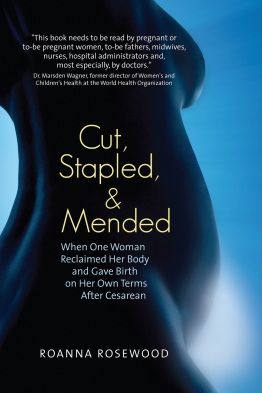
Book Reaction: Cut, Stapled, and Mended

To be honest, I wasn't sure what to expect from Roanna Rosewood's memoir, Cut, Stapled, and Mended. After it arrived I actually wondered if I should have agreed to review it, because I have so many things to read, things to think about, and interests that are calling me---do I really need to read a memoir about someone's cesareans? I've already read so many books about birth, do I really want to read another one? Well...the answer was YES, I did need to read it. After I finished the book, I felt almost speechless at how deeply it had touched me. This book was a surprise all the way through, from the opening Orgasmic Amazon Queen sex scene, to a session with a psychic healer who tapped in to Roanna's past life abdominal wound, to her dogged quest to open herself to her own feminine wisdom, to her birth experiences---all soul-shattering in their own way---this book touched me profoundly. I was shocked to find myself with tears in my eyes at many different points and eventually truly unable to put it down.

Orgasmic Amazon Queen notwithstanding, Roanna comes across as a practical and down-to-earth narrator, who in her quest to understand herself, her body, her inner wisdom, and her birth experiences, makes a decidedly not down-to-earth personal journey through a variety of healing modalities and nontraditional experiences and perspectives. I really loved the balance she struck between the spiritual and metaphysical experiences she describes and the nitty-gritty reality of doing this thing, giving birth. In a perfect example of what I mean, she writes:
You think I would run out of poop but I don't. It's endless poop. 

My ego, having (literally) had enough of this shit, quits. It gets up and walks right out the door. What is left of me poops in the tub. Looking down, I say, 'ewwwww.' I say it as if it wasn't me who just shat in the tub. I say it as if I just happened to come across poop in my bath one day. 'Ewwww' or not, I'm never getting out of the tub ever again. If this tub were full of nothing but shit mud, I would still stay right here (p. 144).
And, just a few pages later, the experience I already quoted in a prior post:
Only then does the Divine come, taking my body as her own. I am no longer alone. There is no fear…I experience completeness. I find religion. Infinity is tangible. Generations of children, their dreams, passions, defeats and glories—they all pass through me, converging here, between my thighs… (p. 146-147).
via Thesis Tidbits: Cut, Stapled, and Mended | Talk Birth
Despite planning homebirths, Roanna experiences two cesareans and her journey towards VBAC is an arduous one:
Deep inside, I feel the screams of birth echoing off the sides of my skull. Softer and softer they fade, becoming a faint whisper, then disappearing completely.
I open my mouth. 'Please,' I whisper-scream-beg-cry, 'please come back.'
She does not.
I am, once again, mortal. (p. 155)
While I would likely proceed with some degree of caution if reading this memoir as a pregnant first-time mom, there is much to be learned from Roanna's experiences. Her narrative is rich, deep, compelling, scary, dramatic, poignant, and powerful. I highly recommend it!

--
Disclosure: I received a complimentary copy of this book for review purposes. Crossposted at Talk Birth.

Friday, February 15, 2013

Documentary: The Mama Sherpas

A CfM Facebook fan recently posted to share some information about an interesting sounding new documentary about Nurse-Midwives:

The Mama Sherpas follows nurse midwives, the doctors they work with, and their patients, in the DC area over the course of two years. The documentary will provide a personal glimpse into what midwives can bring into the birthing process in the hospital system.

Maher focuses on four “collaborative care” practices where doctors and midwives manage women’s care together. Although there is few collaborative care efforts in the United States, research proves that this method provides better outcomes for mother and baby as well as lowers the C-section rate, which has skyrocketed in recent years.

The documentary’s subject is one that explores two of the most heated debates - Women’s Issues and Health Care. This will be an important contribution to women’s films as a genre because knowledge about medical options has often been withheld from women. Additionally, this film will serve as an educational tool to inform women about their own health and bodies.

For information on partnership or sponsoring visit www.themamasherpas.com. Also, visit http://www.facebook.com/TheMamaSherpas for photos, videos, and updates.

Here are a few ways you can help with our outreach:
1. Add a logo of our film to your website
2. Blog about our film
3. Suggest participants
4. Tweet, Link to our website, and share our Fb page
5. Watch and share the scenes (clips are on the FB page)
6. Suggest possible stories to follow! For instance, “I’d like to see how dad’s prepare for labor.” We’ll add it to our story queue!
7. Host a fundraiser in your community
8. Host an Discussion Group about the film and film scenes centered on a topic area
9. Connect us with a community organization in your area
10. And...

Trish is a midwife at Physician and Midwife in Alexandria

Wednesday, January 23, 2013

Postpartum Survival Tips


324“In western society, the baby gets attention while the mother is given lectures. Pregnancy is considered an illness; once the ‘illness’ is over, interest in her wanes. Mothers in ‘civilized’ countries often have no or very little help with a new baby. Women tend to be home alone to fend for themselves and the children. They are typically isolated socially & expected to complete their usual chores…while being the sole person to care for the infant…” –Milk, Money, & Madness
I recently shared this quote on my Facebook page and a reader responded expressing her fear at preparing to face this exact situation. I responded that it is an unfortunately realistic fear and suggested she check out some resources for postpartum planning that might help work through the fear as well as plan for a nurturing postpartum instead of a stressful one. She then responded that she has a very minimal local support system and that got me thinking about postpartum survival tips for when one’s local support system is limited…

My ideas:
  •  Suggest to your out of town friends and family that they contribute to a “babymoon” for you and all pitch in to hire a postpartum doula.
  • Tactfully remind people that even if they’re too far away to bring you a meal, they can certainly call up a local restaurant and order a delivery for you! I think a lot of us forget that is an option for a long distance family member (that we would bring food to if they were local). In my experience, getting enough food is a huge issue postpartum! I remember long distance friends having babies a variety of times and wishing I was close enough to bring them dinner. Duh. Many restaurants do, in fact, deliver food!
  • Be your own “best friend” by preparing and freezing meals and snacks now. I know I sound obsessed with food, but it is totally one the hardest things to take care of postpartum, but so important!
  • Put together a mama survival kit for yourself that you can then open up when you need it. Some ideas here and more ideas of variable quality here.
  • If you don’t have a sense of community work, actively work on building one—go to La Leche League meetings, Holistic Moms Network, Mothers of Preschoolers, Attachment Parenting International, or other mothers’ groups. Go BEFORE you have your baby if you can.
Other ideas for helpers:
  • In addition to my idea of ordering delivery for a postpartum family as a way of bringing them dinner long distance, is to order a dinner through the mail via the business Spoonful of Comfort. They will send fresh chicken soup, rolls, cookies, and a baby present via Priority Mail (packed with freezer packs). I send it with a note saying, “this is me, bringing you dinner!” Friendly tip from unfortunate personal experience: if you are doing this for a friend make SURE you enter THEIR address as the shipping address and not your OWN address, or you will then be forced to enjoy their postpartum meal and feel like a total idiot at the same time.
  • Don’t forget about other meals—breakfast = awesome. Muffins = awesome.
  • Pay it forward–I think sometimes people feel like they don’t know someone well enough to bring them food, or maybe they even do a mental “tally” and think, “well, she won’t be bringing me food ever, so why should I take time to bring it to her” or, “she didn’t make anything for me when I had my last baby, so I’m off the hook on this one.” When I had Alaina, a mother who had literally JUST moved to town and that I had not yet met, sent a hot breakfast casserole to me (that my lovely doula delivered to my lovely mother at the snowy end of my gravel road).  I think of that generosity when I bring a postpartum meal to a mama from whom I will never end up getting a reciprocal meal. Who cares. She needs it. You can do it!
  • Another doula commented on my post: “Do you know a mom that is about to have a baby? Or maybe a momma who just gave birth recently? Don’t even ‘offer’ just show up with a bucket of cleaning supplies, a bag of healthy food, and maybe something nice for her. Go tuck her in bed with baby, and get to work on her home.. When she wakes, she has nothing to do but nurse that baby. (If she has other kids, delegate chores with them, if to young, call mutual friends to sit for them! Our Mom’s need this, up through 6-9weeks pp, Mom’s need help, even longer for some. There is a reason the US has the highest Post Partum Depression issues in the developed world… Create your community! DO IT!” I would add that if you do not know mom well, do not plan to engage in a deep cleaning project and stay for a long time doing such project.
I also posted to the Citizens for Midwifery Facebook page asking for contributions for postpartum survival tips when your local support system is limited. What beautiful, helpful women we have on that page! While I didn’t get many suggestions specifically for minimal local support systems, I did get a nice collection of survival tip ideas:
  • Trust your own instincts. Many women have great advice but if your heart is telling you something else, go with it.
  • Craniosacral therapy… one session for you and one for the baby.
  • In addition to lots of suggestions to hire a postpartum doula, there were lots and lots and lots of shout-outs for placenta encapsulation. I echo it myself.
  • Get out of the house alone! For me, it’s been crucial to my sanity to leave my home, by myself, even if only for an hour or two between nursings. Just a Target run was therapeutic!
  • Kangaroo care for high needs babies.
  • Lots of mentions of it being okay to accept help and okay to ask for help.
  • A lot of new moms get really overwhelmed by family and friends coming by to see baby, and it’s important for them to remember that they can always put out a sign that says “mom and baby sleeping!” (even if they aren’t) anytime they need a break.
  • Watch only positive stuff without violence on TV (cooking shows, home improvement) as regular TV is really violent for new mamas and she may be watching more with all the nursing/healing.
  • Have homemade high protein frozen meals (and snacks) in the freezer before birth so anyone can warm them up for the household after birth. If breastfeeding, get much more rest than you think you need from day one to ensure an abundant milk supply (*note from Molly: it is true that prolactin receptors are “laid down” during the first days of breastfeeding. Breastfeeding “early and often” makes sure that there are an ample supply of receptors in your brain.)
  • Have a sign up sheet for family and friends to choose which chores to help with, gift certificates to a cleaning service, stocking up on disposable plates and dinnerware…
  • A new mommy group can be a life saver. Just knowing that other mommies are going through the same thing help
  • Food registries such as mealtrain and mealbaby. Not enough families know about these amazing and free services. (*note from Molly: we often use Care Calendar locally.)
  • Plan ahead and freeze several of your favorite freeze-able meals. Let the clothes be a little wrinkled. Use paper and plastic ware instead of worrying over dishes. Stay laying down first 3 days postpartum (preferably naked: it gives a certain message and is better for baby anyway) and the first week stay in pajamas. Enjoy frequent rest times, even if you can’t sleep.
  • Baby wearing….lots of time in bed, sleeping cuddling and feeding babe skin to skin…brest friend nursing pillow
  • Send a subliminal message to the limited visitors you’ll have (set limits early with partner) by wearing your robe for several weeks
  • Eat well, accept all offers of help and food, get out of the house alone!
  • I loved getting meals brought by friends, but I didn’t always want to socialize. So, someone to run interference, or maybe a drop-off location for leaving food. (*note from Molly: my doula was the perfect person for this job.)
  • Ask for help! No one will know what you need if you don’t speak up.
  • Don’t go without showering for more than four or five days. Brush your teeth once a day no matter what, even if it ends up being at a weird time. Take your vitamins/ herbal supplements/tea. HYDRATE! Nap with baby if you need to, arrange childcare for older siblings sometimes, but also listen to your instincts—one of my worst baby blues moments was with my third when my older two were gone and I wanted them home!
  • LOVE yourself, nap when you can , Yes you are doing it right, No it’s no ones business (breastfeeding/cosleeping/pumping etc.) allow opinions and advice to slide off, drink lots of water , eat small snacks/meals, love your baby look into their beautiful eyes and connect, skin to skin whenever even with dad or siblings (safely) cherish these moments they don’t last forever, the laundry will get done, the dishes will be get cleaned …
  • Take a “babymoon”. Put on a robe when someone comes to the door–even if you have real clothes underneath. Sleep when the baby sleeps. Don’t answer the phone. Remember, self-care is essential for you to be able to care for your baby.
  • I loved having herbal soaked pad (frozen) to wear afterwards, felt soooo good. Have easy one-handed snacks available and a BIG water bottle.
  • In those last few months of pregnancy I prepare meals to freeze (I start about month 5 or 6). I make up 6 weeks worth of dinners (they always last longer since we have a great church family and friends that bring us meals). After baby is born I can put 2-3 dinners in the refrigerator (to thaw) a few days before I need them. Then all I have to do is pop one in the oven and BAM….dinner’s ready. I love “Don’t Panic, Dinner’s In The Freezer” I & II. The recipes are amazing and all freeze well. Hope that helps!
  • Skin-to-skin in bed for as long as possible; 40 days of rest, recuperation, establishing breastfeeding, bonding, limited visitors, and limited activity; drink when the baby nurses; sleep when the baby sleeps; nurse on demand; learn to wear your baby; and use a peri bottle when peeing! A postpartum herb bath and massage are nice, too.
  • Hot water bottle for afterpains
  • Placenta encapsulation and WishGarden Herbs ReBalance tincture!
  • Chiropractic adjustments, ASAP
  • Call in your mom. My mom’s job after my second was born was to keep me fed and to spend some quality time with my older child.
  • Drag oneself outside and BREATHE! :)
  • Water…..hot tub, shower, steam, pool, raindrops, snow, sauna, bath, river, stream, ocean, lake! If you can, immerse yourself, if you cannot, imagine yourself floating :-)
  • Lots of water, lots of protein and healthy fats, placenta encapsulation and low expectations of anything other than bonding time with baby.
  • Don’t try to impress others with how quickly you can get up and going, even if you can, just take it easy!!!!
  • It’s not in the asking for help; its in the accepting…
Surround her with support!

Check out these previous posts:

Mothers Matter–Creating a Postpartum Plan

Planning for Postpartum

Some reminders for postpartum mamas & those who love them

and a great one for helpers written by my own doula:

The Incredible Importance of Postpartum Support

And, remember…

“The first few months after a baby comes can be a lot like floating in a jar of honey—very sweet and golden, but very sticky too.”
–American College of Nurse-Midwives

This post is crossposted at Talk Birth.

Friday, August 17, 2012

Guest Post: How to Avoid a Medical Induction Seminar


Are you interested in natural effective techniques to avoid a medical induction?

Are you tired of seeing birthing mothers face a cascade of intervention that could be avoided?

Are you frustrated with seeing fear take over what could be an empowering birth?

Are you saddened by the amount of medicalisation in the birth process?
 
We are hosting a one-time complimentary teleseminar on Thursday September 13 at 830am (Sydney Australia time). That’s Perth 630am, Alice Springs/Darwin/Cairns 8am, Auckland NZ 1030am, In other parts of the world this means: Wednesday September 12, LA & Vancouver 330pm, NY & Montreal 630pm & London 1130pm.

Listen LIVE from your land line or Skype on the day if you can as there will be specials, or else receive a recording later and listen to it when you’re free – it’s that easy!

SAVE YOUR SPOT NOW BY CLICKING HERE => http://acubirth.com.au/opt-in-sept-2012

On this call, Naomi and Rebecca from Acubirth and the Red Tent Health Centre will reveal:

          • The biggest mistake that can hinder the start of birth

          • The best acupressure point to encourage bub to engage and ripen that cervix

          • What the ancient secrets are and how they can empower your women

          • How Chinese medicine can deliver more choice and effective outcomes for birth

          • The importance of touch and how crucial it is in the lead up to birth

          • How to calm nerves and deal naturally with anxiety

          • Inspiring pregnancy and birthing stories where situations have been incredibly turned around using acupressure

You definitely want to save your spot for this one-time event. It’s so easy to attend from anywhere, in the comfort of your own home or wherever you are on the move. If you can, be near a computer connected to the internet, as we’ll be referring to juicy info on line.

Naomi and Rebecca both run Acubirth for Midwives as well as the Red Tent Health Centre in Sydney, Australia. Acubirth is a specialised education website for midwives to find out how natural eastern remedies can improve birthing outcomes for their clients, as well as how it can support their own health and wellbeing. All courses are accredited by the Australian College of Midwives.

On this exciting call you will not only get an insight into how supportive Chinese medicine can be for your women but you will come away with tools you can use right away. On the day we’ll be telling you how you can learn even more about acupressure for midwifery, in a way that’s accredited by the Australian College of Midwives (and we’re in the process of getting specialty credit from the American College of Nurse Midwives also).

SAVE YOUR SPOT NOW BY CLICKING HERE => http://acubirth.com.au/opt-in-sept-2012

We look forward to meeting with you on the 13th.

Warmly

Naomi Abeshouse and Rebecca Mar Young
Your Eastern Birthing Mentors
Acubirth and Red Tent Health Centre

ACUBIRTH FOR MIDWIVES
~ Empowering mothers with eastern remedies ~
www.AcuBirth.com.au

Join our Acubirth for Midwives facebook group: Acubirth-for-Midwives
Follow Acubirth on Twitter @AcuBirthSydney: https://twitter.com/#!/AcuBirthSydney

Monday, May 21, 2012

I am a Midwife Campaign

MANA has a great educational campaign going on right now called I am a Midwife. The campaign involves a series of short videos released once a week about a variety of topics. More than just a general education campaign, each video includes a variety of different women--midwives, mothers, public health activists, maternity care activists, authors---speaking out on important topics in maternity care. Each woman also identifies, "I am a Midwife." This week's video is about health disparities in maternity care, which is a very important and too-often ignored topic. It raises the concern that African American women and their babies are more likely to die than their Caucasian counterparts even when other variables are equalized (i.e. same socioeconomic status, same education, etc.) and moves into wider discussions about racism and the treatment of minority group members. It then focuses on the value and role of midwifery care in addressing these concerns.


As MANA states in relationship to this campaign: "For midwives, sharing is daring. We dare to challenge the status quo. We dare to speak up for women's innate wisdom in pregnancy and birth. We dare to assert that there is a better way for our babies to be born. And we dare to insist that birth belongs to families."

Absolutely! The I am a Midwife public education campaign is extremely powerful. I have to confess that when it originally launched, I didn't personally make time to watch the videos right away, somehow assuming that they were "generic" videos with a "rah, midwives!" type of message. Don't make the same mistake I did. These are quality videos with important messages, powerful voices, and essential education and information. You will definitely learn something from watching them!

--
Molly
CfM Blogger

Saturday, May 12, 2012

Answer Ina May's Call: This Mother's Day, Support A Woman's Birth Choices


“{I am calling] for greater involvement of women in the formulation of maternity care policy and in the education of young women and men about birth. Women who are fully informed about the capacities of women’s bodies should lead the way, and all women who care about social justice and human rights should be involved.”
– Ina May Gaskin, Birth Matters: A Midwife’s Manifesta

Happy Mother's Day!

Here at Citizens for Midwifery, we have been heeding Ina May’s call for more than 16 years, providing women with evidence-based information about pregnancy and birth, and supporting state and national efforts to secure access to midwifery care for all women.

And we need your help! We can’t do it alone!

US Birth statistics and maternity care present many challenges:

One in three US babies are born by cesarean section, a rate more than twice that recommended by the WHO, a rate that results in harm to mothers and babies.

Racial disparities in birth outcomes remain a tremendous problem. For example, African American infants are 2.4 more times likely to die in their first year than white infants, and African American women are more likely to have cesarean sections, and nearly twice as likely to experience preterm labor or give birth to a low birthweight baby. Midwives providing individualized care have been successful in reducing these disparities.

In countries with lower c-section rates and better maternal and infant outcomes than ours, midwives provide primary care for all healthy pregnancies and births.

Access to midwives and the Midwives Model of Care in the US is limited. CPMs are licensed or legally recognized in just 27 states, and CNMs are restricted in the care they may give by practice agreements and supervision requirements in 23 states.

In the US in 2009, only 8.1 % of births in all settings were attended by midwives.

Citizens for Midwifery is working to meet those challenges, with information and action.
  • Through our website and educational materials, we provide women and birth advocates with high quality, consumer-focused information.  Our website reaches many women every day (over 66,000 every year!), who download materials or find midwives and advocates in their area.
  • Citizens for Midwifery represents consumers as essential stakeholders and elevates the importance of the consumer voice in key national forums on the future of midwifery care.  As part of the MAMA Campaign, CfM continues to work actively to achieve federal recognition for CPMs, so that more and more women of all income levels will eventually have access to the Midwives Model of Care.
  • CfM has been at the forefront, using the internet and social networking to reach more women and families than ever before with solid information that is helpful when making maternity care choices and for advocating for the Midwives Model of Care. We have one of the most active Facebook pages reaching consumers, with over 5,000 people on our page and lively exchanges occurring on a regular basis.

Now we need YOUR financial support so we can do more and even better! Times and technology are changing, and we need your help to update our infrastructure so we can reach more women even more effectively.

Your donation today will help us to:
  • Update our online infrastructure to more effectively communicate with women and activists.
  • Launch targeted educational campaigns and materials to meet the diverse needs of women and birth advocates.
  • Maintain a consistent consumer presence representing women at critical moments and decision points in the evolution of US midwifery.
With your support we can reach more expectant women and advocates and do more to advance the Midwives Model of Care than ever before!

Please make a donation today!
Donate Now        
Visit the CfM Fundraising page at www.cfmidwifery.org/Donate. And please share this letter with your friends and family on Facebook, Twitter and email listserves.  Mothers and babies, now and in the future, will love you for it!

Thank you!

Nasima Pfaffl
President

P.S. Your donation, of ANY amount at www.cfmidwifery.org/Donate, will help us answer Ina May Gaskin’s call to equip women with the information and tools to improve maternity care in their communities.

Monday, April 2, 2012

Book Review: Into These Hands

Into These Hands: Wisdom from Midwives
Geradine Simkins
Paperback, 300 pages
Published by Spirituality & Health Publisher, 2011
ISBN: 9780981870854
Wisdom from Midwives
Reviewed by Molly Remer, Talk Birth

Into These Hands is an amazing anthology of midwives’ retrospectives about their careers and midwifery journey. You won’t find birth stories here–this is book about women’s lives and journeys to midwifery. A book of midwife stories–how women are birthed as midwives, rather than about births they attended–Into These Hands is great reading for aspiring midwives or for currently practicing midwives who wish to feel a sense of solidarity with their sisters. There are many paths, many lessons, many voices and each midwife clearly loves women and has a passion for birth.

From the press release:

We are eager for you to meet some modern-day wise women, healers, revolutionaries, and reformers. Into These Hands, Wisdom from Midwives© is a comprehensive anthology of the life stories of 25 remarkable women who have dedicated their lives and careers to the path of social change through midwifery. These exemplary midwives are all over 50 years of age with 25-40 years in the field. Collectively, they have over 800 years of experience and have assisted in over 35,000 births.

The midwives whose voices are included in the anthology come from diverse backgrounds, training, experiences, and range of practice settings. Quite a few of the stories are from “bridge club” members–women who began as direct entry midwives and later became CNMs. These midwives have a foot in both worlds and insight into the politics of the profession. In general, Into These Hands is a good look at the politics of midwifery both past and present. Almost all of the midwives in the book have homebirth roots or orientation.

Since there are lots of voices represented, the tone or style of some stories is more compelling than others. Some within-story chronology jumps were a little confusing and there were a couple of stories in which I had to do some re-reading for clarity.

Into These Hands is likely to be of particular interest to midwifery activists, aspiring midwives, or current/retired midwives and may hold less appeal for general birth enthusiasts, doulas, or childbirth educators. The stories are rich, insightful, thought-provoking, and diverse and they brought tears to my eyes several times. This book is a treasury of women’s wisdom and a powerful legacy for the generations of women to follow.

20120402-120957.jpg

(An indicator of how much I like a book is how many page corners I turn down in order to come back to re-read those sections and write blog posts based on them/share quotes/etc. This is Into These Hands last night as I was finishing it...;-D)

Disclosure: I was provided with a complimentary copy of the book for review purposes.

Wednesday, March 21, 2012

Book Review: More Than a Midwife

More Than a Midwife: Stories of Grace, Glory, and Motherhood [Paperback]

by Mary Sommers
MavenMark Books (HenschelHAUS Publishing) (October 1, 2011), 148 pages
ISBN-13:978-1595981066

Reviewed by Molly Remer, Talk Birth

More Than a Midwife is a thoroughly delightful little volume by experienced and resourceful midwife, Mary Sommers. One of the things that makes the book particularly distinctive is the impressive diversity of Mary’s work experience. The book includes stories from her work as a midwife in urban Chicago as well as in Africa and Mexico. As always, glimpsing the dire situations facing birthing women cross-culturally is a sobering reminder of the immense challenges international midwives face with few physical resources—they accomplish an amazing level of care with only their heads, hands, and hearts.

Each story shared in the book is selected with care and has an important message to share. The stories are about unique women and their unique births and what Mary (and the reader) can learn from them. From empowering and exhilarating, to difficult and heartbreaking, particularly notable are the stories that remind us all to treat every woman with dignity and respect, regardless of her life’s circumstances or choices. Mary is clearly a midwife who loves women and birth and practices with sensitivity, respect, and positive regard.

More Than a Midwife is a slim paperback. It is nice size to hold easily and the stories are short and easy to read in small chunks of free time. It is occasionally erratic in the organization/flow of a story and in a few of them I had to re-read segments to understand chronology. However, this was a negligible issue in the context of this thoroughly enjoyable small book.

Mary Sommers has written a true gem of a book. I feel honored to have read More Than a Midwife and I highly recommend it to anyone interested in birth, homebirth, midwifery, or women’s health. Most excellent!

Disclosure: I was provided with a complimentary copy of the book for review purposes.

Saturday, February 11, 2012

Grassroots News: $40 Million Going Towards Early Inductive Election, Prematurity

Hello Friends,

The US Department of Health and Human Services (HHS) has launched a campaign called the “Strong Start Initiative,” which is designed to decrease the number of preterm births occurring every year. Babies born prematurely are more likely than babies born at full term to experience a vast array of medical complications both in infancy and across the lifespan. In order to reverse a 20 year trend of increasing rates of prematurity, the HHS has announced the availability of $40 million in grant money for programs that are exploring ways to reduce prematurity through improved prenatal care.

The “Strong Start Initiative” will focus on reducing early elective inductions, which are labors that are induced prior to 39 weeks and without any medical indication. The rate of early elective inductions has increased dramatically over the past decade and is associated with poorer outcomes for babies and increased obstetrical interventions, including cesarean section. Reversing this trend can improve the health of babies and reduce unnecessary medical intervention in birth.

In addition to creating conditions for healthier births and babies, the Strong Start Initiative has the potential to save considerable health care costs that are typically associated with preterm births. The HHS will partner with the March of Dimes, the American Congress of Obstetricians and Gynecologists, and other organizations to implement this campaign.

To learn more about current research on early elective inductions, see the recent Citizens for Midwifery article.
To learn more about the “Strong Start Initiative,” read the full press release.

Warmly,

Lauren Korfine & The CfM Team